




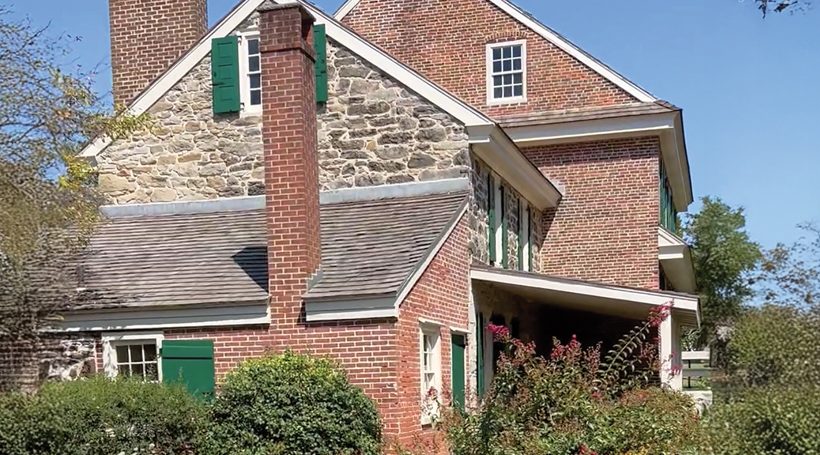
Today, Red Bank Battlefield Park is a peaceful place to walk, play and enjoy views of the Delaware River. But more than two centuries ago, it was the site of a pivotal Revolutionary War battle.
Look beyond the scenery and you’ll find stories of South Jersey that are worth hearing.
1. The Whitall Family Was Here First
Long before the battlefield became a park, James and Ann Whitall established a plantation along the Delaware River in 1748. The 400-acre property included orchards, livestock, a lumberyard, a shad fishery and a ferry.
The couple raised nine children in the house and relied on the labor of indentured servants. Their surviving home offers a window into life in South Jersey before the American Revolution changed everything.
2. A Fort Rose Beside the Family Home
In 1777, American forces constructed Fort Mercer just north of the Whitall House. Its location along the Delaware River helped American troops defend the approach to Philadelphia and challenge British efforts to supply the occupied city.
The fort was still unfinished when enemy troops arrived. Visitors can explore its remains and imagine how dramatically the military installation transformed the Whitalls’ once-busy agricultural property.
3. An Outnumbered Army Won the Battle
On Oct. 22, 1777, Hessian soldiers fighting for the British attacked Fort Mercer. The American defenders, led by Col. Christopher Greene and largely composed of troops from Rhode Island, held their ground.
The Battle of Red Bank was brief but fierce. Despite facing a much larger force, the Americans successfully defended the fort and inflicted heavy losses on the Hessian troops. The victory provided a much-needed boost to the American cause.
4. The Whitall House Became a Field Hospital
As fighting moved across the property, Ann Whitall reportedly remained near her home. After the battle, the house was transformed into a field hospital where wounded soldiers received care.
The rooms that had once held the rhythms of family life became scenes of surgery, suffering and recovery. The house’s role as a hospital remains one of the park’s most powerful connections to the human cost of the Revolution.
5. The Peaceful Landscape Still Holds the Past
Hundreds of Hessian soldiers died during the battle, and many were buried near the Whitall House. Monuments, archaeological discoveries and the surviving remains of Fort Mercer continue to reveal pieces of what happened here.
Today, visitors can follow walking trails, study the memorials and look across the same river that made Red Bank so strategically important. In winter, bare trees and quiet paths make it easier to see the shape of the historic landscape – and reflect on the stories it preserves.
Before you go: Red Bank Battlefield Park is open daily from sunrise to sunset, except Christmas Day and New Year’s Day. Visit the Gloucester County website for current information.