




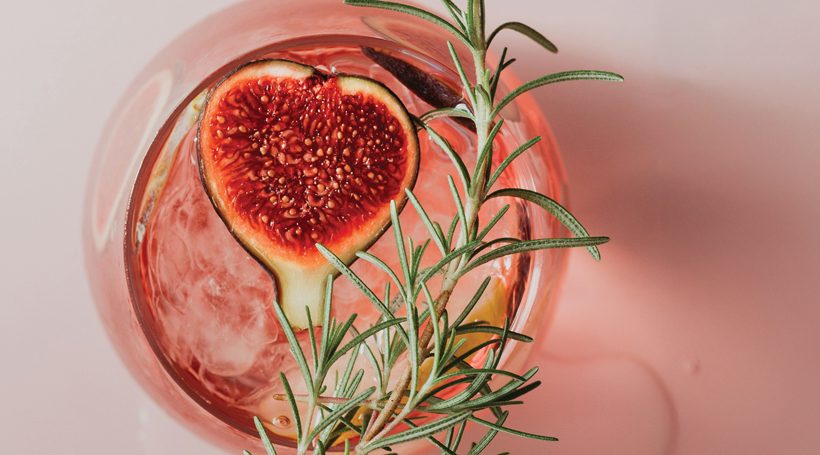
For anyone who wants an alcohol-free night out, the appeal makes sense. You still get the fun drink, the social ritual, maybe even a little mood shift – without the baggage of booze.
And bars are catching on. Mocktail menus have moved far beyond seltzer with lime. Kava and kratom are part of that trend – botanicals with long histories now turning up in drinks mixed with coconut and chai, cucumber and basil, citrus, hibiscus, matcha and mango, sometimes dressed up with all the fun of a cocktail.
Kava is usually the unwind drink. Kratom is often added for more lift – mood, focus, energy or pain relief.
But the very language that gives the drinks a healthy aura – plant-based, alcohol-free and natural – can also make products derived from these plants easy to misunderstand and underestimate.
The risks can range from impairment and liver problems to dependence and withdrawal. Which is a lot to leave off the mocktail menu.

Joseph D’Orazio, MD
Not just herbal extracts
Traditionally brewed as tea for religious and social ceremonies, Kava comes from the roots of a pepper plant native to the South Pacific.
Kratom is extracted from the leaves of a tree native to Southeast Asia that has a caffeine-like feel in low doses but acts more like a sedative in larger quantities.
Some wellness-themed bars make the case that their drinks stay closer to traditional use. But outside that setting, kava and kratom can also show up as powders, capsules, bottled drinks or concentrated extracts far removed from a brewed tea or raw leaf.
Those products can deliver much higher doses than the plant itself.
“We’re talking about a highly concentrated version of this natural substance,” says Joseph D’Orazio, MD, a medical toxicologist and addiction medicine specialist with Cooper University Health Care. “That’s when people are running into problems.”
Kava: still under the influence
With kava drinks, the risk can be easy to miss because people may not feel impaired or know their limits.
“The big thing with kava is the cognitive impairment,” says Mike D’Arrigo, PharmD, an emergency medicine pharmacist with Inspira Health. “People may feel awake and alert, but their judgment and reaction time can still be affected.”
At higher doses, he says, kava can cause sedation and tiredness, making driving especially risky. He warns against mixing it with alcohol, sleep aids or anti-anxiety medications.
D’Arrigo also advises older adults, heavy drinkers and anyone with liver disease or a history of liver transplant to avoid it altogether.

Mike D’Arrigo, PharmD
Kratom: More than a mocktail
Outside alcohol-free bars, kratom products are easy to find at gas stations, smoke shops, convenience stores and online.
Because kratom can feel opioid-like at higher doses, he says, people may use it for pain, cravings or withdrawal without realizing it can create dependence of its own, says D’Arrigo.
He has treated only three cases in four years, but each was serious, he says. In every case, the patient had bought kratom at a gas station.
One patient said he turned to kratom when he no longer could afford medication used to treat opioid dependence and tried it to taper off opioids. Instead, he arrived at the ER almost completely unresponsive, with pinpoint pupils and slowed breathing – symptoms that mimic an opioid overdose, D’Arrigo says.
But kratom is not treated exactly like an opioid overdose. Narcan, which is used to reverse opioid overdoses, may help in some cases, D’Arrigo says, but it is not an established treatment for kratom. For the patient he saw, care came down to keeping him breathing while his body cleared the substance.
D’Orazio says the risk can be difficult to spot because many products sold as kratom are far different from the plant itself.
One of kratom’s compounds, called 7-OH, occurs naturally only in trace amounts. But manufacturers can chemically convert another kratom compound into 7-OH and concentrate it into much more potent products. As a result, a gummy, shot, or capsule marketed as kratom may bear little resemblance to chewing the leaf or brewing it as a tea, D’Orazio says.
The blind spot
Kava and kratom sit in a gray area. Prescription drugs are reviewed before they reach patients and come with lists of side effects. Alcohol is regulated. Marijuana sold in dispensaries comes with testing and labeling rules. But kava and kratom products have far fewer checks before they reach consumers.
“It’s really like this blind spot from a public health standpoint,” D’Orazio says.
Poison-center reports are rising sharply. Kratom-related reports rose by 1,200% in the last decade. D’Orazio points to the rise and popularity of stronger, more concentrated products as part of what changed.
The Food and Drug Administration has recently warned about concentrated 7-OH products while making a distinction between those products and traditional kratom leaf. New Jersey lawmakers are considering legislation that would classify 7-OH as a controlled substance, and other states have already moved to restrict concentrated products.
D’Arrigo does not rule out that kava or kratom could someday have a clearer medical role, especially if researchers better understand how to dose, monitor and regulate them.
But many of the products sold today are far different from a medication studied, dosed and monitored for safety.
“Maybe there will be a use in the future,” D’Arrigo says. “But it’s so early on in the process that we’re seeing bad events from something that’s natural.”