

The New Jersey Girl Report presents a sobering picture of girls growing up under intense emotional and social pressure, even as they excel in school and plan for the future. Its findings reveal serious challenges, but they also point toward solutions rooted in belonging, mentorship and adults who are willing to listen.
Some days, 16-year-old J’Nya does not want to leave her bed.
“I feel numb, sad, or angry a lot,” says J’Nya, who lives in Camden County. “I don’t really like to go outside or do much. Mostly, I just like to sit in bed and do nothing. My doctor told me I have symptoms of severe depression, but I didn’t really think of it as depression. I just thought, ‘This is how I am as a person,’ because I was so used to not dealing with my emotions. I had so much going on in my life that I just pushed things aside.”
That struggle exists alongside a life full of service and adventure. A Girl Scout since second grade, J’Nya has fed people experiencing homelessness, volunteered in Camden and tried horseback riding and archery. Yet her description of her inner life is striking.
“One way I think about it is that I’m kind of like a balloon – like I’m just the air inside, floating along,” she says.
“My general call to action for every adult is: What are you doing to make the girls around you feel seen and acknowledged?”
That coexistence – potential alongside pressure – is the central tension in the 2025 New Jersey Girl Report, commissioned by the four Girl Scout councils serving the state, including Girl Scouts of Central & Southern New Jersey.
The report assembles publicly available data and peer-reviewed research across four categories: physical health, life readiness, emotional wellness and social well-being. The report found what statewide averages can obscure: Girls and boys often experience growing up in New Jersey differently, says Ginny Hill, CEO of Girl Scouts of Central & Southern New Jersey.
“We have a special responsibility and accountability to girls,” Hill says. “We’re one of the country’s longest-standing and largest organizations for girls, and we span the entire state of New Jersey in a way that not all organizations have the capacity to do. That gives us a special responsibility to understand who girls are and what they need, and to work with everyone who touches their lives to create positive change.”
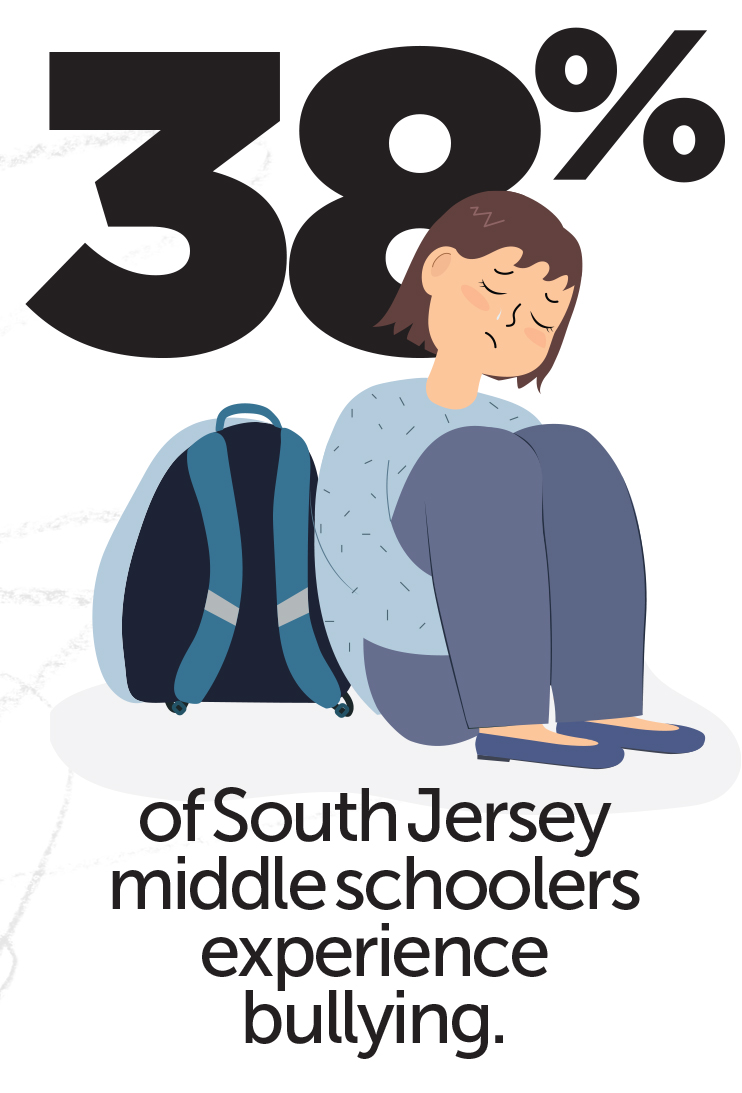
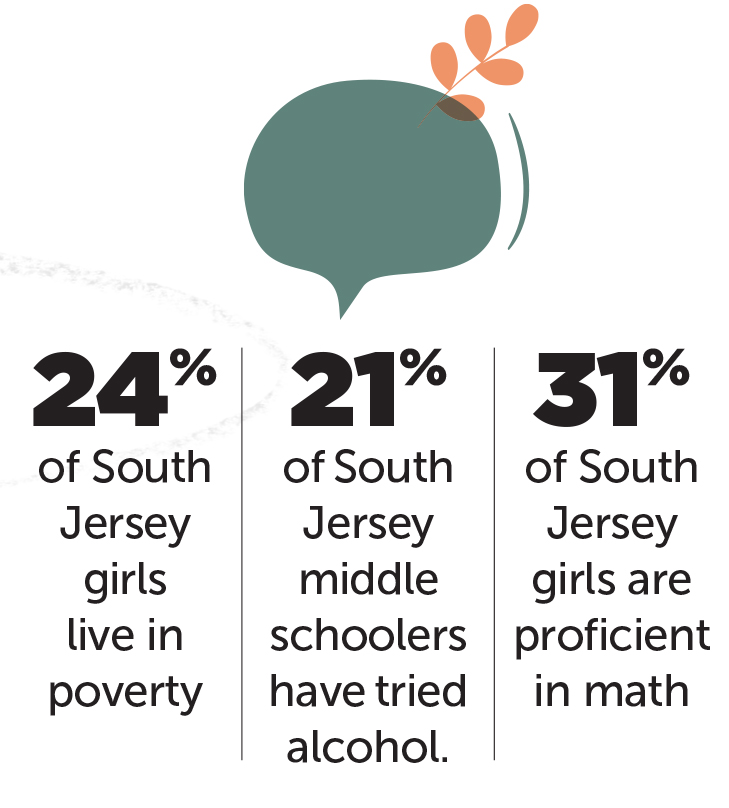
While some of the report’s findings reveal impressive momentum, data related to girls’ mental health is sobering. One in six New Jersey high school girls has experienced sexual violence. And middle school girls also report more substance use than boys in every measured category. Hill was especially troubled by evidence that girls are turning to multiple substances to escape pressures that technology makes almost impossible to leave behind.
“When I was growing up, you could leave the schoolyard and get away from the bullying for a while,” Hill says. “You could go home and be in the bubble of your house, your family and your close friends. Kids today don’t have that because their environments are with them 24/7.”
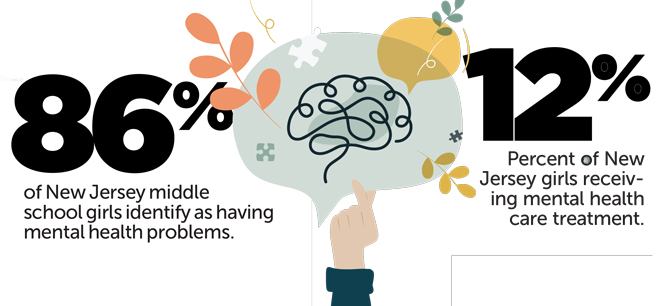
 The report also found that more than half of high school girls show signs of depression and one in four has seriously considered attempting suicide. Even when girls need help, many families struggle to find appropriate mental-health care, leaving some of the state’s most vulnerable young people without adequate support.
“There’s online bullying and the emotional toll social media takes on kids,” Hill says. “They feel they have to be online 24/7, whether because of fear of missing out or because they worry that if they’re not present, they’re not cool. That creates a tremendous amount of pressure.”
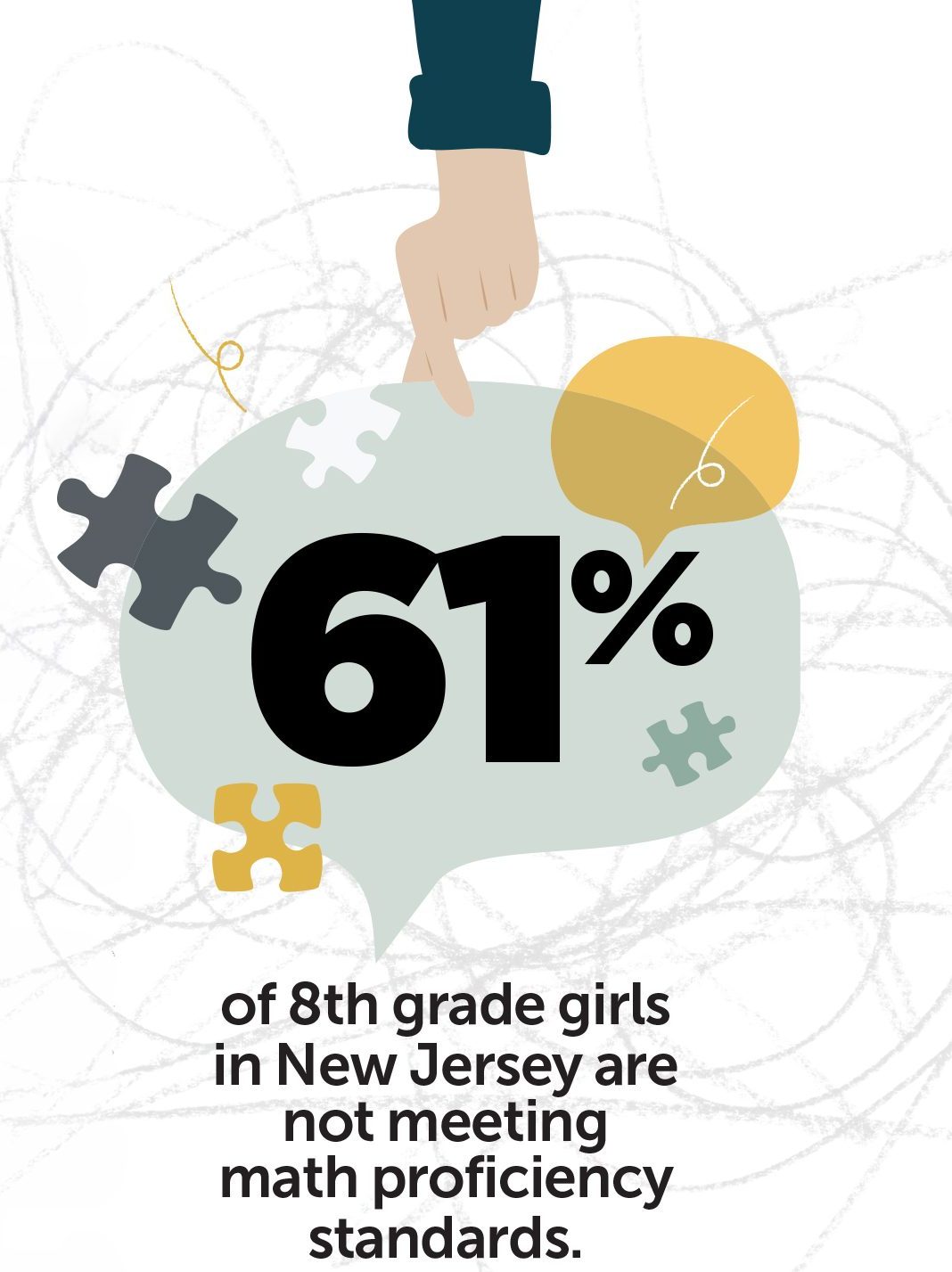
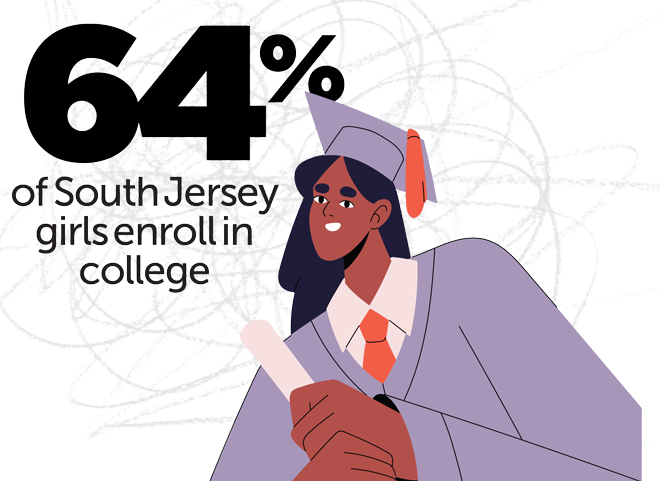
In contrast, the findings also reveal impressive progress academically, Hill says. Girls are more likely to pursue advanced coursework, graduate on time and enroll in college, she says. The challenge, Hill adds, is ensuring that their academic progress carries into college and careers, particularly in STEM fields where women remain underrepresented, suggesting, Hill says, that the gap is not rooted in ability but in exposure, confidence and a sense of belonging. She believes the lack of visible role models continues to shape those decisions.
“It’s hard to go somewhere when you haven’t seen another woman go there before, and that is likely still influencing the choices girls make once they reach college,” she says.
Those pressures are often hidden beneath good grades, activities and outward achievement. That is why the findings should not be read as two separate stories – one about successful girls and another about struggling girls, says Hill.
They are frequently the same girls.
 The report also found that many New Jersey girls lack a mentor outside their family, even though those relationships are linked to stronger academic performance, better mental health and lower substance use. The need is especially clear at school, where some girls do not trust adults to intervene when bullying occurs. Hill believes those relationships can change how girls understand both their struggles and their possibilities.
“Girls want to feel seen and acknowledged,” she says. “My general call to action for every adult is: What are you doing to make the girls around you feel seen and acknowledged?”
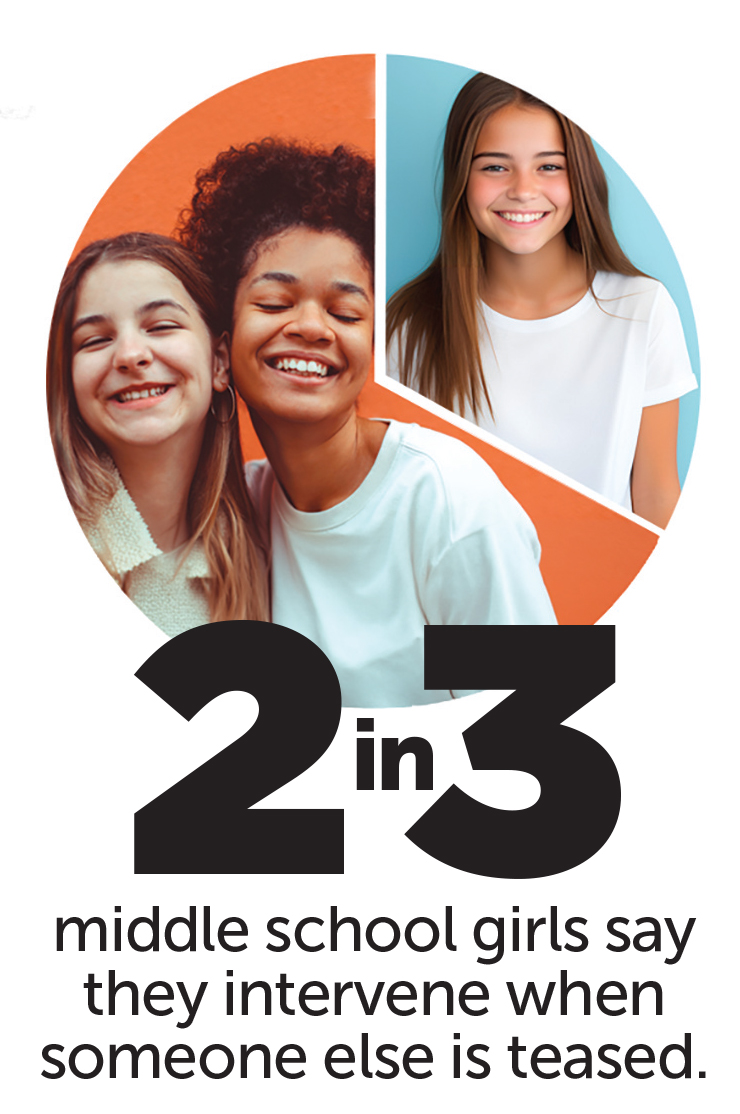
Girls also draw strength from one another, the report finds. Nearly two in three middle school girls say they intervene when someone else is teased, suggesting that peer relationships can serve as a powerful source of protection.
“I think women and girls have always had a superpower in sisterhood and how we lean on one another,” Hill says.
Next Steps
The report’s suggested next steps are both structural and personal: Introduce girls to STEM early, connect them with supportive peers and female role models, improve schools’ ability to notice distress in high-achieving girls, normalize conversations about mental health and teach all young people about consent and bodily autonomy.
Hill says that process begins with recognizing girls’ existing strengths and giving them room to grow.
 “We don’t tell a girl, ‘We’re going to make you confident,’ because that implies she’s broken when she comes in,” Hill says. “We know she’s already amazing, regardless of her circumstances, and that she can continue to grow through what she experiences as a Girl Scout.”
The data can provide adults, schools, policymakers and community organizations with a clearer understanding of what girls are carrying, Hill says. The next responsibility is to act on it.
“I think the message is that we shouldn’t accept data simply for data’s sake,” Hill says. “We need to look at what each of us can do. This is really a call to action, and there are both small and large things we can potentially do.”
Her hope is that if the report is done again, it will reflect not only continued academic achievement but a generation of girls who feel less burdened by expectations and more secure in themselves.
“I would hope some of those statistics come down and that more girls feel centered, feel free to be themselves and experience greater social and emotional well-being,” Hill says. “I’d love to see girls less concerned about how they look and more focused on what they’re doing and achieving, because girls are doing and achieving so much – and that’s what really matters.”