



Scroll long enough and you’ll see them.
Ads promising medical solutions to all kinds of medical conditions. And reels of influencers casually mentioning the medication they “finally tried.”

Snehal Gandhi, MD
Many South Jersey health systems use telehealth on a regular basis to connect physicians to their patients. But online-only platforms – companies like Hims, Hers and Alloy – are popping up to provide consumers direct (and fast) access to providers and medications. Often, these platforms rely on questionnaires rather than in-person physicals or comprehensive lab results.
That messaging resonates because it speaks to real frustrations around cost, access and long wait times.
“It’s instant gratification,” says Snehal Gandhi, MD, chief medical information officer of Cooper University Health Care and Cooper’s medical director of hospital medicine. “You can sit at home, dial it up, pay cash and you’ve got your prescription.”
Here are four things worth knowing before you click “get started.”
1. Convenience vs. continuity – it matters
What separates care delivered through a health system from many online-only platforms isn’t the technology. It’s whether care is connected over time.
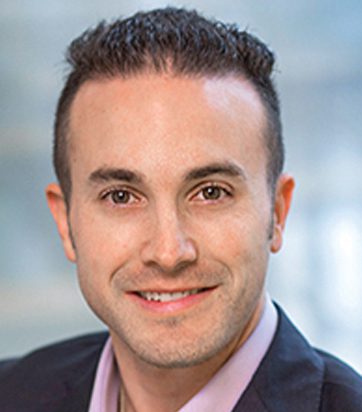
Michael Stabile, MD
Think of telehealth as a blanket term that covers very different experiences, says Michael Stabile, MD, Capital Health’s medical director of virtual primary care. “There’s telemedicine, where you’re speaking to your primary doctor or a specialist who you have a relationship with,” he says, “and then there are online companies that you’re reaching out to for a specific issue or a prescription you’re requesting.”
“I’m a primary care physician, so we have a strong focus on relationships with people for years, relationships with families for years,” says Stabile. “Speaking to your primary doctor or a specialist you already have a relationship with is different than reaching out for care built around a specific issue.”
That distinction matters, Gandhi says, because the issue that brings someone in isn’t always the whole story. “You may come in for one thing,” he says, “but you have other things going on.”
In a health system, those overlapping issues are addressed across providers. “You may have a urologist, a pulmonologist, a cardiologist,” Gandhi says. “All of these different specialists, including the primary care doctor who’s the captain of the ship, are all working together.”
2. Your whole medical record matters too
One reason online-only platforms can feel straightforward is that the visit is built around the information a patient provides.
“That’s a way we differentiate ourselves from some of the online telehealth companies,” Stabile says. “They don’t have access to the medical records. They don’t know the consult notes or the full medical history, and they’re essentially relying on the patient’s description or their interpretation of their medical care.”
Within Capital Health, he says, telehealth operates inside a shared chart. Even when patients use virtual urgent care and see a physician they don’t already know, that provider has access to the patient’s full history, including a list of medications, prior visits, lab results and specialist notes.
3. Treating the symptom isn’t the same as treating the problem
Many of the conditions in direct-to-consumer healthcare advertising are symptoms rather than diagnoses, including erectile dysfunction, weight loss and hormone concerns.
Gandhi says those issues are rarely just one thing.
“There’s many reasons why somebody may suffer from erectile dysfunction,” he says. “It could be high blood pressure, diabetes, coronary artery disease. It could be medications they’re taking. It could be hormone issues.”
In clinical practice, that symptom is typically treated as a starting point, not an endpoint. “Our mindset is, why does this patient have erectile dysfunction?” Gandhi says. “What else might this be telling us about the patient that we need to further look into?”
That line of questioning can redirect care, leading a physician to evaluate cardiovascular risk, review medications, assess metabolic health and hormone levels before deciding whether a specific medication for the symptom itself is most appropriate, Gandhi adds.
Online platforms are typically more narrowly organized around the condition a patient presents, with care structured to determine eligibility for a specific treatment, Gandhi says.
Within a questionnaire-based model, eligibility determines what happens next. “It’s a checklist,” Gandhi says. “If you meet the criteria, medication is prescribed.”
The same structure applies to online companies selling weight loss medications. Stabile says prescribing GLP-1 drugs in a traditional setting typically involves confirming whether other medical conditions affect safety or appropriateness before treatment begins.
“Otherwise,” he says, “they wouldn’t know if there are thyroid issues or liver problems or kidney problems that potentially could be a contraindication.”
4. Prescriptions are only the beginning
Prescribing is a starting point. What follows – monitoring, adjustment and accountability – is where the stakes rise.
With online-only platforms, Stabile says, ongoing care typically isn’t built into the model in an accessible way. “There’s no monitoring of blood work, there’s no real specific follow-up,” he says.
In contrast, when care happens within a health system, the same physician or group of physicians continues to manage and adjust treatment over time, with access to testing and a patient’s broader medical history, he says.
Gandhi describes how that structure plays out when problems arise. “They basically prescribed you a medication,” he says. “And then it’s, ‘If any of these things happen, go to your nearest ER, don’t call us.’”
With GLP-1 medications, those side effects can include severe nausea, dehydration, constipation and kidney issues – problems Gandhi says he sees when patients end up hospitalized.
“Why not be under the supervision of a physician so if there are any complications we can address it as quickly as possible?” he says.
Stabile acknowledges that cost is one of the reasons patients turn to telehealth platforms, particularly when insurance doesn’t cover brand-name medications. But he says lower-cost options, including compounded drugs, come with tradeoffs patients may not fully understand.
“They’re not regulated the same way,” he says. “You don’t necessarily know exactly what you’re getting.”
Stabile adds that he’s worked with online platforms himself and understands their role in expanding access. “There is an important role for telemedicine and for the various companies that offer different services,” he says. “But that just doesn’t replace the physician-patient relationship.”