




Behind your favorite South Jersey places, there was probably a woman doing something ahead of her time. Check out these history lessons you didn’t know happened right in your backyard.
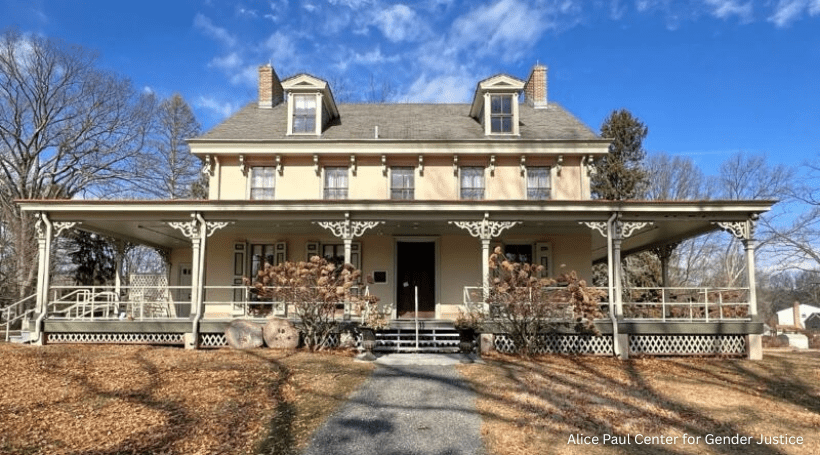
Alice Paul Center for Gender Justice
Mt. Laurel
Alice Paul was a leader in the fight for equal rights through the 20th Century, starting with the fight to give women the right to vote in 1920. She was also born right here in Mt. Laurel. Her home, Mt. Laurel’s Paulsdale, now serves as the headquarters for the Alice Paul Center for Gender Justice, an organization that continues the fight for gender justice.
Harriet Tubman Museum
Cape May
You might not immediately think of Cape May when you think of abolitionist Harriet Tubman, but the shore town played an important role in Tubman’s work. She lived there in the early 1850s, working to fund her plans for freeing enslaved people. The museum outlines the life and work of Tubman as well as other important figures in the fight for freedom who spent time in Cape May.
Haddonfield
That’s right, Haddonfield was founded by and named after a woman. Elizabeth Haddon traveled in 1701 to the new world that would become the United States. Here, she settled on a plot of land that her father purchased for her and established a Quaker community, which she was active in with her husband, Quaker minister John Estaugh. Later, that area was named after her family: Haddonfield.
James and Ann Whitall House
This former 400-acre plantation built by Quakers James and Ann Whitall played an important role during the Revolutionary War. Located next to Fort Mercer, where a battle between colonists and Hessians unfolded, the house became a hospital for colonists. Before that battle, British troops had urged residents to flee, but Ann Whitall refused to leave. Ann was given the nickname “The Heroine of Red Bank” for her work tending to soldiers. Today, you can visit the house for tours.
Clara Barton Schoolhouse
In 1852, Clara Barton started Bordentown’s first public school in a dilapidated, one-room schoolhouse. While free public education was a law in New Jersey, it was not implemented. But Clara set out to change that. She started with six children in 1852 and by the next year, her program was teaching over 600 children throughout the city.
Honorable Mention: Sara Spencer Washington
While Sara Spencer Washington didn’t name anything after herself, she had a huge impact on Atlantic City. Founder of a Black women’s hair care and cosmetics company in the ‘30s, Sara became a millionaire and changed the game in Atlantic City. In addition to her lucrative company, she purchased the Hotel Brigantine and opened it to Black customers. When golf courses in the city wouldn’t allow Black members, she opened her own, Pomona, which still exists today.