

At all stages of a woman’s life, her health will change – hopefully in positive ways, but sometimes those changes need attention. We sat down with several South Jersey providers who care for women in a variety of specialties to see what women should know about their health and how they can be proactive in staying well. When life is filled with others they need to take care of, sometimes a woman’s health is the last to get attention. That’s definitely not a good idea, these experts say. Definitely not.
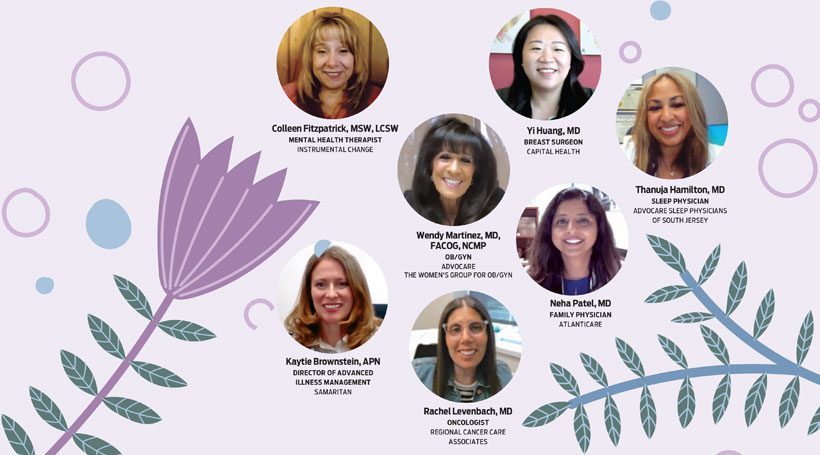
Participants:
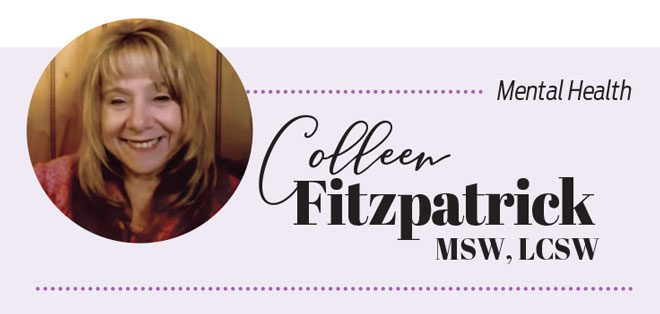
Colleen Fitzpatrick, MSW, LCSW, Mental Health Therapist, Instrumental Change
Yi Huang, MD, Breast Surgeon, Capital Health
Thanuja Hamilton, MD, Sleep Physician, Advocare Sleep Physicians of South Jersey
Wendy Martinez, MD, FACOG, NCMP, OB/GYN, Advocare The Women’s Group for OB/GYN
Neha Patel, MD, Family Physician, AtlantiCare
Kaytie Brownstein, APN, Director of Advanced Illness Management, SAMARITAN
Rachel Levenbach, MD, Oncologist, Regional Cancer Care Associates
What women may not realize
You don’t have to have a crisis to be in therapy. Therapy is not just for anxiety or depression. It’s for hope, helping you cope with everyday life stressors. And a lot of people wait and wait until they get too stressed out, and then they have a hard time getting across what they need. If people enter therapy when there’s no major crisis going on, we have already built a rapport. I mean, imagine yourself in a crisis and you go to a stranger. Right?
Colleen Fitzpatrick
Women don’t realize how early they should start taking care of themselves – don’t wait until you’re older. You really should be stopping alcohol, stopping smoking and vaping, getting screenings. Young people think they’re going to live forever so they don’t go for checkups. They really need to take care of themselves.
Dr. Wendy Martinez
Most of the time women will say they feel fine. Thing is, feeling fine doesn’t mean you’re healthy. You need to listen to early warning signs, like always feeling tired or not sleeping well. There are many conditions that develop silently, which women don’t realize because they are so busy with their work and kids and life.
Dr. Neha Patel
Good sleep can actually make you look better. While you sleep, there’s a boost in collagen, the growth hormone that helps with skin repair and rejuvenation. You have increased blood flow while you sleep, so that helps decrease dark circles and there’s less puffiness. When you get good sleep, there’s less cortisol, one of your stress hormones. Increased cortisol can increase the risk of acne, inflammation and weight gain.
Dr. Thanuja Hamilton
I wish women were more aware of their breast health year ’round. The most important thing is getting to know what is normal for you, so if something were to change, you might be the first to notice and you can have it checked out. It’s also important to know that most of the time, breast changes are actually not related to cancer, but that doesn’t mean they should be ignored.
Dr. Yi Huang
Women are often unaware of how complex caregiving can be. I think we know that caregiving is a huge job and it is incredibly difficult, but it’s really hard to quantify what it means to care for somebody else and ourselves at the same time. We forget that there are actually two people involved. And even when we know that, it’s a whole other thing to actually live it.
Kaytie Brownstein
One thing women can do today
Get morning sunlight. Get outside for 10 minutes, or if you’re inside, sit by a window for about 20 minutes. In the winter, you could always use a light box – at least 10,000 Lux of light, blue wavelength. Sunlight starts your circadian rhythm. So about 14 hours after you get that first shot of sunlight you have a melatonin surge, so you can start preparing for bed. Morning sunlight helps you sleep better at night.
Dr. Thanuja Hamilton
The most important thing is making sure women are getting their mammograms. Mammogram screening is extremely important in finding early-stage breast cancer and has significantly decreased developing invasive breast cancer. And if a woman develops invasive breast cancer, getting it at a very early stage is important.
Dr. Rachel Levenbach
Thinking about end of life should not happen at the end of life. One of the most important things we can do is have those conversations as soon as possible, both with ourselves and with our loved ones. An easy way to start the conversation with a loved one might be to frame it as an act of service. Saying, “By you telling me how you feel, you can take some of the stress off me as a loved one.” When people think about it as a gift, they may be more willing to engage.
Kaytie Brownstein
One thing? I would say consistency. Because consistency beats perfection every time. Focus on daily habits: quality of sleep, regular exercise, balanced nutrition, and on top of that, preventive care. If you’re consistent with these and make them part of your routine, that goes longer than working for a fraction of time and then stopping.
Dr. Neha Patel
Eliminate smoking and vaping, because smoking increases your risk of so many different cancers, including GYN cancers. They don’t have long-term studies for vaping like they do for smoking, but they’re finding vaping is just as dangerous.
Dr. Wendy Martinez
Imposter Syndrome
The chief concern I see is imposter syndrome, where high-achieving women have chronic self-doubt. They feel like they constantly have to prove themselves. Imagine feeling like you went through all this school, all this training, and then you start to doubt yourself. It’s a struggle for them every day. You can learn how to deal with it better, but it takes a lot of skill building.
Aging
We look in the mirror and sometimes we don’t recognize ourselves. With perimenopause and menopause, all kinds of things happen – it’s harder to lose weight, your face changes, your relationship with your spouse changes. Parenting relationships change. There are more life decisions to be made. I say to my clients: “We have a pizza. It’s eight pieces. How many pieces are your relationship with your husband? How many pieces are your job?” So we get a visual representation of what is taking up the most headspace.
Parenting & mental health
It takes a woman’s brain and body a good eight months to a year to adjust after they’ve given birth. So some people think it’s a luxury to have a house cleaner or a babysitter every weekend or someone who drops off food a couple times a week. That is not a luxury. That’s a necessity in today’s society. Our expectation is just too high of women, especially mothers.
Stress and anxiety
Seek help, and help doesn’t necessarily mean going on medication. Help can be: Let me rearrange my schedule so I have more free time. Help can be: Let’s get a babysitter every Saturday. Help can be: Let’s get a dog that we could walk. It’s different for everybody. You have to look outside the box for what you can do.
When a friend is depressed
I’ll tell you what not to do: chronic positivity. If you say to one of your friends, “You seem pretty sad,” and they say, “I don’t want to talk about it,” then don’t talk about it. Respect people where they are. Respect that boundary. Validate. A lot of times in the beginning, people try to minimize the symptoms when they’re pretty profound. One small thing could trigger everything that has built up.
Technology & social media
We have lost the ability just to simply be kind to one another. In America, we are very focused on material things and the comparison game. I advise you get off social media slowly – wean yourself. I’ve been off several years, and it’s been the best years of my life.
Challenges for caregivers
Oftentimes, the caregiver becomes so focused on their loved one that they forget to take care of what makes them who they are. So that can mean the loss of hobbies, relationships, even things like reading a book. I hear that time and time again.
Caring for caregivers
I try to help a caregiver find their North Star – the one thing that really, really matters the most. I talk with them about their values. If they tell me their loved one has a huge priority to spend time with their faith, I’m going to find someone who can spend time with them in prayer, and once we have that one critical thing in place, other priorities start to fall in line.
Social connection
Social connection matters for women, not just as caregivers, but also as patients. We know that being engaged helps keep the brain functioning at a high level. To be able to have a conversation, you have to be able to process the words you’re hearing and understand their meaning. You might need to engage in nonverbal expression, like reading social cues. When you do those things, you’re flexing an important muscle – your brain.
Staying connected as you age
Forming connections as we age is difficult, but it’s important. We know that one in four Americans is socially isolated, and that can lead to poor health outcomes. Whether it’s going to church, talking to your neighbor, even just getting out for coffee and talking to the barista, those things keep you engaged. Sometimes little interactions can help you stay socially connected.
Palliative care vs hospice
Palliative care provides services when somebody has an early diagnosis, but may not be sick yet. That’s when our palliative medicine team can sit with them and talk about what might be important. But then, as we start to move through a truly life-limiting illness and we know we are facing the end of life, that’s when we look to hospice services.
When a loved one is in hospice
Trying to understand the needs of somebody at the end of life is really, really individualized. When you start to think about what your loved one might need as they are getting sicker, it really means you need to take some time to talk with them and listen. You may or may not be able to talk with them in the moment. Or they simply may not be able to talk about it anymore, so you might have to draw on a lifetime of conversations where you learned their values. Samaritan can help with that.

Annual check-ups
Prevention is always easier than the treatment. During the annual physical, we check blood pressure, cholesterol, screen for diabetes, mental health issues. If something comes up, that treatment is much easier than finding something when it’s out of control.
Nutrition and exercise
Food and movement is the best daily medicine –without any side effects. It controls pretty much more than half of the health issues: high blood pressure, diabetes, your weight. For women, if you have healthy habits, you can encourage your kids and your partner to be part of that, and life becomes so much easier for everyone around you.
Health concerns as women age
In each decade, a woman’s healthcare needs evolve. Oftentimes we hear, “I turned 50 and everything’s falling apart.” But again, that’s when you’re not taking care of preventive measures. When you hit 40, get a mammogram done on a routine basis. At 45, colonoscopies are done for screening. When menopause hits, you need a bone density scan. Yes, as women age, there are challenges. Management will focus on prevention and personalized care at that point.
Making time for your health
Do you brush your teeth, shower, go to bed? Is that part of your daily routine? Eating healthy and exercising should be part of your routine too. If you wake up 15 minutes early and go to bed 15 minutes later to work out, you get 30 minutes of working out every day. And if you don’t have time to prep meals, I would say the fastest fast food is a bag of carrots, a bag of cucumbers. If you’re busy, you have no excuse to not grab a banana or an orange.
“Dr. Google”
It is ok to Google, but you need to use it smartly. You don’t want to 100% rely on that, and say, “Oh, Dr. Google said I’m fine.” Visit your doctors and make sure you get the right screenings or tests. You can Google to learn things like what food is good to control cholesterol or how to live a healthy lifestyle. But diagnosing yourself or being anxious because Google said you might have cancer, you definitely don’t want that.
Common chronic diseases for women
Issues that are more common in women than men: autoimmune conditions, thyroid disorders, osteoporosis, anxiety and depression, especially for older women. Early detection and lifestyle management can help. For instance, starting patients early on calcium, vitamin D and exercise can help a lot with osteoporosis.
Aging & breast cancer
As women get older, they’re exposed to estrogen longer. Even in postmenopausal women when your ovaries are no longer making estrogen – and a lot of women don’t know this – there still is estrogen in breast tissue and fatty tissue. So as women get older, there is longer exposure to estrogen. And estrogen is probably the most important factor in women developing breast cancer – not every woman, but longer exposure to estrogen can increase a woman’s risk of developing breast cancer.
Immunotherapy
Immunotherapy has just exploded in the oncology world, and it’s being used in many different cancers. We’re not using it right now as much in hormone-positive breast cancer, but it’s very important in triple-negative breast cancer. Immunotherapy is a group of drugs that, in simplest terms, basically targets the patient’s immune system and treats the cancer like it’s a foreign body, so then the immune system comes in and fights it like it would an infection. So the immune system revs up and fights the cancer just like it would if a person had an infection. Typically, it’s very well tolerated.
Immunotherapy vs chemotherapy
In general, chemotherapy targets rapidly dividing cells, and it has side effects like hair loss or nausea. Immunotherapy mostly targets through the immune system, and it has less minor side effects but there is a small risk of more severe side effects, because it can cause an immune response.
Triple-negative breast cancer
For every breast cancer, we check three markers: the estrogen level, the progesterone level – those are the hormone markers – and then something called HER2. Triple-negative means those three markers are all negative. So for treatment, we can’t use hormone therapy, or endocrine therapy, because the tumor is not being driven by hormones at all.
Having a double mastectomy
I often see women who think if they remove both breasts, there’s no chance the breast cancer could come back. This isn’t always true. It will lower your risk of developing breast cancer in your breast tissue, but it doesn’t change your risk of it coming back outside the breast tissue. In general, that risk is relatively low. But I do like to explain this to women, because sometimes it changes their thoughts to think maybe they don’t need to have both breasts removed. I just want women to know the risk isn’t zero, even if you have your breasts removed.
Endometriosis
Endometriosis is the enemy. It’s chronic, inflammatory and estrogen dependent. Endometriosis is when endometrial tissue that’s usually in the uterus has gone out to other places. It can cause extreme pain, especially during a period, but you can have the pain even when you don’t have a period. Usually, we’ll see it in a female who had her first period before age 10 or women who have not had children. We also know it can be genetic. So if you have a first-degree relative who had endometriosis, you have a 3-9 times increased risk of developing it. Also, individuals diagnosed with endometriosis are more than 4 times more likely to develop ovarian cancer.
Treatment for heavy periods
First thing is to have a pelvic ultrasound as well as a physical exam to see why you’re having these heavy periods. A lot of times a woman will need a D&C hysteroscopy, which is where, with a little anesthesia, we dilate the cervix and I look inside the cavity of the uterus with a tiny scope. Most of the time, what do I find? Polyps or fibroids inside the cavity that you wouldn’t be able to feel during an exam. Once we take them out, a lot of times, the heavy periods will go away.
Benefits of HRT
HRT can help relieve hot flashes, night sweats, insomnia, incontinence, dryness of the vagina, painful sex, as well as brain fog, because when a woman isn’t sleeping and not getting into that deep REM sleep, they wake up and feel foggy during the day.
Who shouldn’t take HRT
Women who should not take HRT: anyone who has had a pulmonary embolism, blood clots, a heart attack or stroke. There is a lot of discussion on if it’s right for women who have had estrogen receptorpositive breast cancer, but it depends on the stage and the receptorship. They will need to have a discussion with their doctor.
Is osteoporosis a given?
Not every woman will develop osteoporosis as she ages. HRT is one of the best treatments that can stop you from getting osteoporosis. But if a woman has been taking calcium and vitamin D, and they’re exercising, they will have good bone health. I have patients in their 70s and 80s who don’t have osteoporosis.
Misconception
Women sometimes believe if you have no cancer in your family history, you won’t get cancer. But you could be the first person in your family.
Risks for breast cancer
Some risk factors are simply out of our control, like our gender or age or genetics. Some things we do have control over, including trying to maintain a healthy weight, staying active, limiting your alcohol intake and avoiding smoking.
Lumpectomy vs Mastectomy
This decision is very individualized. Lumpectomy is a procedure where only a small portion of the breast is removed – an area containing the cancer with a rim of healthy tissue around it. Typically, this is followed by radiation. This has outcomes equivalent to a mastectomy in early-stage breast cancer.
Deciding on treatment
It’s important to emphasize that this is not just a medical decision, but also a personal one. For a patient to feel more confident in their choice, they need to feel empowered and informed and heard. I’m a strong believer in shared decision-making. Our conversation starts with me breaking down the complex medical information into something that is more easily understood. I try to tailor my conversation to the patient once I have a better understanding of their goals and priorities. Some patients may want every detail before they make that decision, and others look to us for a clear recommendation.
Advancements
Most patients diagnosed with breast cancer now undergo a procedure called sentinel lymph node biopsy, where only a few lymph nodes are removed for testing. 20 years ago, if a woman was diagnosed with breast cancer, most would have the majority of lymph nodes under the armpit removed, which carried a very high risk of developing swelling of the arm, called lymphedema. In certain patients, we actually have strong data that suggests we can skip the sentinel lymph node biopsy without compromising their outcome. We’ve come a long way.
Recovery after breast surgery
Patients are often pleasantly surprised by the recovery process. With lumpectomy, most patients report minimal to no pain, and there are very few limitations to physical activity. Most go back to work after two or three days. Even with a mastectomy, we try to keep patients comfortable. We will usually do a nerve block at the time of surgery and then give patients pain medication. A lot of patients tell us they never end up taking the pain medication.
Misconceptions
A lot of people come to me thinking mastectomy is a safer treatment choice, but in reality, for a lot of early-stage breast cancers, lumpectomy with radiation is just as effective as mastectomy.
Insomnia
Is it really insomnia, or are there secondary causes? It could be anxiety or depression. It could be restless legs, or it could be sleep apnea. And while medications can be helpful, they’re not the answer. Cognitive restructuring, your sleep hygiene, relaxation techniques – addressing all those things are important before you say you have insomnia.
Stress & sleep
The time when stressful thoughts enter your brain is when it’s you and your head alone in the dark, right? So you have to give stress its place. Write a list of your stressors during the day. That takes some of the chaos out of your head and organizes it somewhere else. Don’t let your bed become the place where you bring stress. Have your wind down time – make it your special time.
Snoring & women
Anyone can snore, and there are many different reasons why we might snore. It can be caused by your tonsils, your tongue, your uvula. It could be the relaxation of muscles from alcohol. Or when we’re super tired, just like our muscles give out, our airway gives out. It could be age. It could be inflammation. When we’re sick, we snore more. With acid reflux, we might snore more. But then is it more than that – is it apnea? That’s when you have to look into it.
Your phone
I know if I pick up that phone when I’m in bed, I’m in trouble, because nobody ever looks at one video and says, “Ok, terrific, I’m done.” It’s time distortion – feels like 10 minutes, but it’s actually been an hour. And there’s always an emotional engagement when you’re on social media, whether you’re laughing or appalled, whatever it is, that’s going to affect your ability to sleep. Set aside time to scroll during the day, and enjoy it guilt free. But leave the bed for sleeping.
Planning for sleep
People plan their diets, their meals. People plan their workouts. But if you plan for sleep, it will affect every aspect of your life. It’s almost more important than anything else.
Catching up on sleep
Women think they can catch up on sleep on the weekend, so they sleep in or take a long nap. But that sets you up for problems because you’ve overslept or you’ve now messed up that internal circadian clock. What I would say is go to bed 15 minutes earlier, and then 30 minutes, and then an hour, whatever it is to get you to your optimal sleep time. Don’t try to catch up on the weekends, because it doesn’t happen.