

When stardom starts to feel possible, 20-year-old Zoe Grossberg heads to the Cherry Hill Mall, intent on dressing for her dream life.
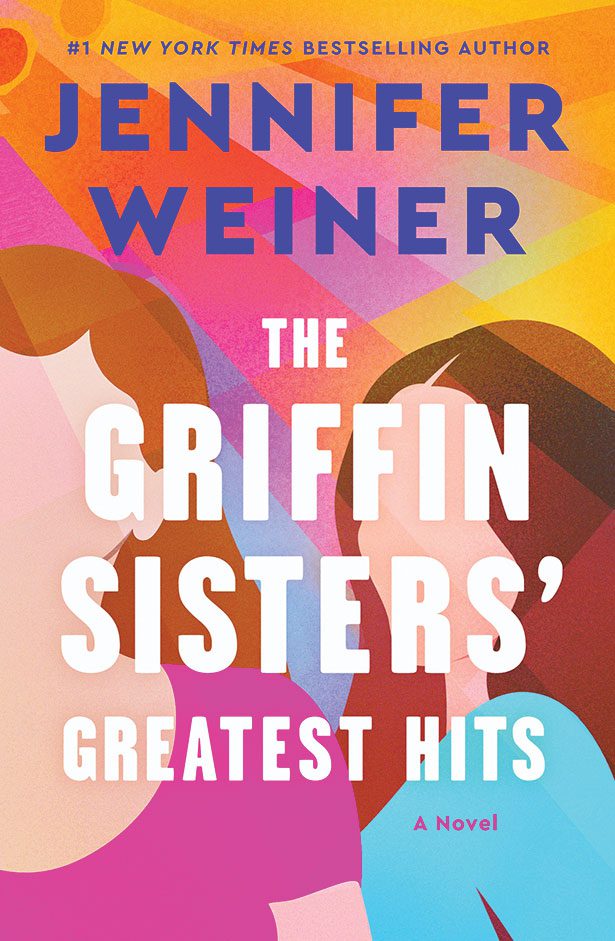
The moment arrives early in “The Griffin Sisters’ Greatest Hits,” Jennifer Weiner’s latest novel and soon-to-be film directed by Amy Sherman-Palladino (of Gilmore Girls and The Marvelous Mrs. Maisel fame). The story is about a fictional pop band rocketing toward fame in the early 2000s. Discovered at a Philly bar talent show, Zoe and her sister Cassie are riding that anything-can-happen rush – the brief, electric stretch before success hardens and the fallout begins.
Zoe, the sister with ambition, beauty and sheer force of will, borrows the family car, crosses the Ben Franklin Bridge and drops $700 at Nordstrom.
That kind of detail is familiar territory for Weiner.
“Honestly, I don’t think I’ve written a book where somebody doesn’t go to the Cherry Hill Mall,” she says. “It’s my thing.”
It always has been. From 2001’s “Good in Bed ”– which launched her career at 29 and sends the lead character’s glamorous best friend Sydelle on a Cherry Hill Mall shopping spree that helps set the book’s social stakes – then “In Her Shoes,” adapted into a major film starring Cameron Diaz, Toni Collette and Shirley MacLaine, Weiner writes South Jersey scenes not as a mere backdrop. It’s the terrain that guides the lives of many of her characters.
Weiner lives in Philadelphia, but South Jersey has long been part of her orbit. She came to the region as a student at Princeton, then stayed after landing a job at The Philadelphia Inquirer and settling into the writing life. Over the years, that connection grew – seeing concerts at the Scottish Rite Auditorium in Collingswood, countless trips to Adventure Aquarium when her daughters were young and summers at the Shore visiting her in-laws’ place in Ventnor.
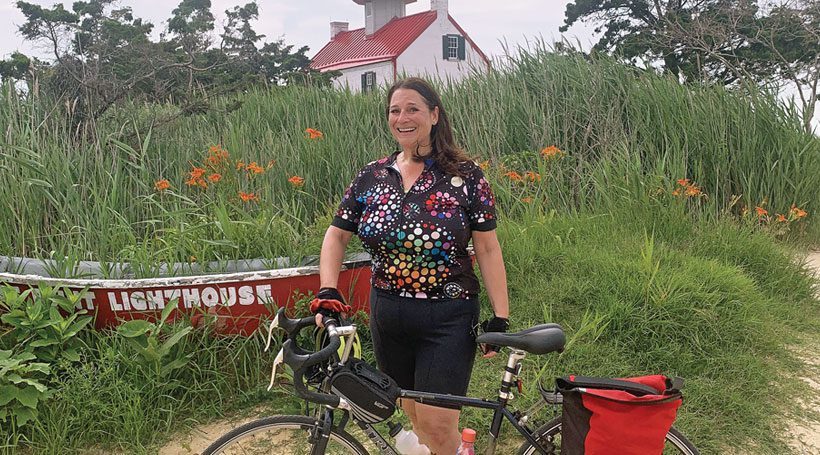
That connection sharpened during the pandemic, when gyms and yoga studios closed and she returned to biking, often crossing the bridge and spending long hours exploring towns and trails here.
“I always have to have a picture of the house and the neighborhood in my head,” she says. “As I started riding more, I just fell in love with those South Jersey enclaves.”
The Griffin Sisters’ Greatest Hits, her 19th book, comes out in paperback in June. It also marks a first for Weiner: her debut selection for Book of the Month, a boon that introduces her work to a younger readership, she says.
Weiner also continues to write regularly for The New York Times, weighing in on culture and politics – from why audiences have flocked to HBO’s “Heated Rivalry” to Taylor and Travis to what’s missing in the Epstein Files narrative.
The newest novel lands in Haddonfield. Moving between the sisters’ brief brush with fame, infamy and its present-day aftermath, the novel finds Zoe long removed from the glamorous world where she burned bright for barely a year before being spit out. Now remarried with a blended family, she fills her days with carpools, pilates and PTA meetings – a version of suburban order carefully designed to keep the past at bay.
But that history is shared with her younger sister, Cassie – a piano virtuoso with a rare voice and songwriting talent, but none of Zoe’s polish or ease with attention.
A volatile mix of rivalry, betrayal and tragedy eventually sends Cassie off the grid. She disappears to Alaska for 2 decades, cut off so completely she isn’t even aware that Zoe was newly pregnant at the time of the band’s very public, tabloid-ready implosion.
It’s Cherry – Zoe’s gifted, ambitious, and magnetic daughter – who bridges the sisters. Chasing her own musical ambitions, Cherry’s drive forces the older women to reckon with their shattered past.
After “The Breakaway,” Weiner’s 2023 novel about a plus-sized woman who leads a cycling trip across New York state, she found herself pulled back to the early-2000s music scene. After reading Britney Spears’ memoir, The Woman in Me, she started thinking about the era in a different light.
“It was terrible,” says Weiner. “The media was awful. The paparazzi were awful. The way women were treated was awful. Misogyny was just the air we breathed and the water we swam in.”
It wasn’t only how brutal that period was, but how normal it felt then. “I was buying the magazines,” she says. “I was the audience that made that coverage profitable.”
Looking back now as the mother of daughters, she adds, was uncomfortable to face, and worthy of exploring.
“I’ve always been interested in questions of being a woman in the world,” she says. “How do you live in a body? How do you tell your story to yourself? How do you tell it to the world?”
It’s a through line that runs across her novels. “When women tell the truth about their lives,” Weiner says, “that’s how we leave things better for the next ones.”
Cassie perfectly fits into a type of character Weiner has crafted throughout her career. It’s her talent and unique voice that attracts the love interest, unnerves her sister and deeply connects with fans who see themselves reflected in her.
Weiner makes that impact clear with a fictional fan letter woven into the narrative. Addressed to Cassie, it reads: “You looked like me and you were on that stage, on TV, and you weren’t there as a ‘before’ on a weight-loss show or commercial. You weren’t a problem to solve or something that had to change. You were the star.”
That insistence, on fully realized women whose bodies are part of their experience but never the whole story, has long set Weiner’s work apart. It also raises new questions in the current moment, as weight-loss drugs reshape the conversation around bodies, choice and visibility.
What gives Weiner pause isn’t individual choice, she says, but how quickly certain bodies risk disappearing altogether. “I don’t know what happens to stories about larger women if suddenly we pretend they don’t exist,” Weiner adds.
Those questions – about bodies, visibility and who gets taken seriously – are already carrying forward. Her work in progress, she says, centers on a literary power couple who move through decades of marriage, ambition and imbalance.
“They meet when they’re both trying to get published,” Weiner says. “He’s the son of a very famous literary writer. She’s working class.”
The story follows what happens not just in their relationship but in their career trajectories. “It’s about creativity and marriage,” Weiner says. “And about who’s allowed to be a great American novelist.”
While the themes stay the same, what has changed is where she is writing from. With one daughter already launched into her own career and another heading off to college, Weiner has more uninterrupted space – fewer daily demands and more time at her desk.
“My life just kind of opened up,” she says. She writes every day now, by habit more than pressure.
“I’m happy every time I sit down in front of my laptop,” she says. “Really, genuinely happy. This was what I wanted to be when I grew up. The fact that I still get to do it feels amazing.”