


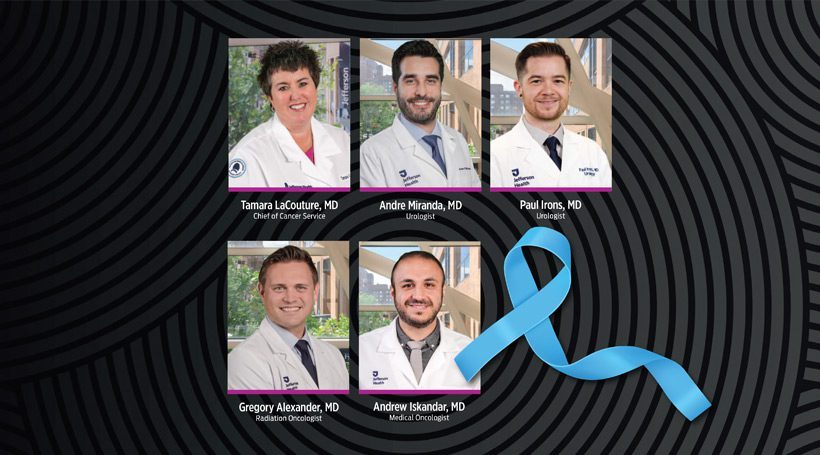
Not many people realize that if a man lives long enough, odds are high he’ll get prostate cancer. The good news is it probably won’t kill him – prostate cancer is highly curable when caught early. We asked specialists from Sidney Kimmel Cancer Center – Jefferson Health to walk us through everything men and their families need to know about this common cancer.
Participants:
Tamara LaCouture, MD Chief of Cancer Service
Andre Miranda, MD Urologist
Paul Irons, MD Urologist
Gregory Alexander, MD Radiation Oncologist
Andrew Iskandar, MD Medical Oncologist
Participants are from Sidney Kimmel Comprehensive Cancer Center – Jefferson Health, Jefferson Cherry Hill and Washington Twp. Hospitals

Symptoms – or lack of them
The vast majority of men with prostate cancer are not going to have any symptoms. Symptomatic prostate cancer is usually very advanced prostate cancer. Luckily, we can find it through a simple blood test called a PSA, at a stage when it’s not yet causing symptoms.
Dr. Andre Miranda
Society tells you that as you get older and need to go to the bathroom at night more, or have weakness in your stream, it’s just your prostate getting bigger. But those are things to bring up during your office visits with your primary care doctor – or a reason to see a urologist and get the ball rolling on a workup.
Dr. Andrew Iskandar
Patients are usually asymptomatic most of the time. But every now and then, I have seen patients who maybe have blood in their urine or blood in their semen, or they’re starting to have more difficulty with urination. If it’s very advanced, they may have something like back pain. But most often, there are no symptoms.
Dr. Paul Irons

PSA screening
Just because your PSA is high doesn’t necessarily mean you have prostate cancer. A urinary tract infection or something called prostatitis – even riding a bicycle or motorcycle on your way to the lab – can mildly elevate that number falsely. After we confirm it’s truly elevated, we typically do a biopsy to make an actual diagnosis.
Dr. Paul Irons
We usually start checking men’s PSA once a year or every two years, starting at age 50 for the general population. For men with risk factors, we can start even earlier – at 40 or 45. A normal PSA does not always mean you don’t have prostate cancer, and a high PSA doesn’t always mean you do. I tell patients it’s the best test we have, but it’s not perfect. We need more than PSA alone to diagnose prostate cancer.
Dr. Andre Miranda
“Watchful Waiting”
Watchful waiting is also called active surveillance. For patients who have low-risk prostate cancer, they can often safely delay treatment. For example, if a patient with low-risk disease elects to proceed with active surveillance – in 10 years, about half of those patients won’t require treatment. For younger patients, it generally requires repeat biopsies and PSA monitoring to make sure the disease does not progress. For patients in their 80s, you can sometimes elect to not treat, closely monitor and only intervene if symptoms arise.
Dr. Gregory Alexander
A good amount of our patients come to us because we have such a good team at Jefferson. There’s lots of communication between us. Here in New Jersey, we have access to resources at our Philadelphia campus, so there’s a lot we can do to back up active surveillance to try to alleviate any anxiety. It’s that sort of teamwork between our sub-specialties that makes our program pretty great.
Dr. Andrew Iskandar
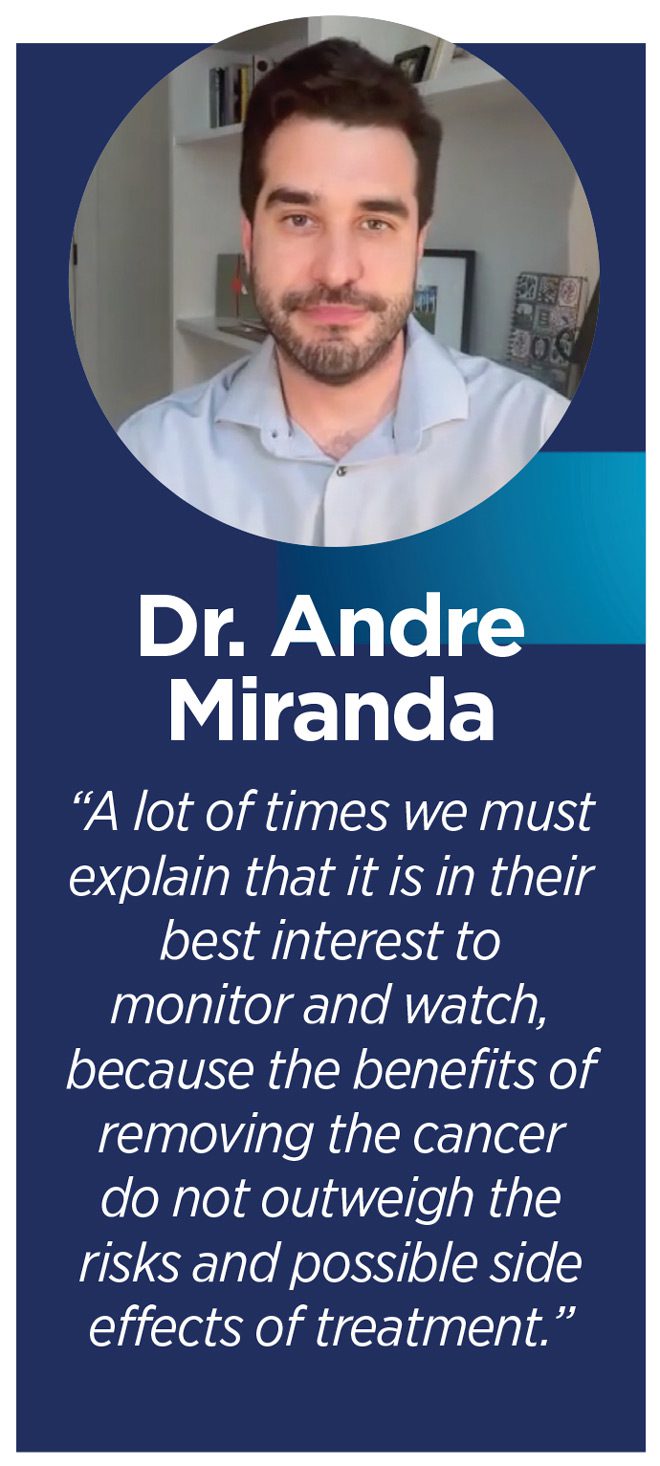
Some patients are very anxious – the word cancer is very heavy for them, and they want it out. A lot of times we must explain it is in their best interest to monitor and watch, because the benefits of removing the cancer do not outweigh the risks and possible side effects of treatment.
Dr. Andre Miranda
The patient’s journey
Patients usually start with their primary care doctor who checks the patient’s PSA. If the PSA is high, they are sent to us, and we usually repeat the PSA. We will get imaging of their prostate and then do a prostate biopsy. If we have a cancer diagnosis, we stratify the patient into risks, and then I discuss possible treatments, both surgery and radiation. I would discuss if they want to see one of our radiation oncologists, and I send them to our medical oncologist as well.
Dr. Andre Miranda
Traditionally, as a radiation oncologist, I come into the journey after a patient is diagnosed with prostate cancer. However, at Jefferson, we have the Prostate Evaluation Program, where radiation oncology and urology get involved early to try and reduce delays in care. We evaluate men at high risk who either have an abnormal PSA or an abnormal prostate exam to help guide them more quickly into appropriate diagnosis and treatment.
Dr. Tamara LaCouture
In early prostate cancer, I’m probably the last person to see the patient. When we’re talking about late stage or advanced prostate cancer, I may be the first person to touch base with the patient. And usually it’s because they’re in the hospital – something’s going on, maybe they had a disease that went undetected and spread to their bones. They developed a fracture, came to the hospital, and we did some testing and found out its prostate cancer that spread. I get consulted in the hospital and manage the initial stages of that.
Dr. Andrew Iskandar
If a man lives long enough…
I had an attending in training who would say 100% of men will eventually have prostate cancer – there’s not really a way to prove that, but on autopsy studies, if you’re looking in depth, once somebody is 90 or even 100, there is some probable slow-growing prostate cancer there. I think by around age 80, it’s closer to maybe 50-70% of men. This is why watchful waiting has come into the picture. If it is there, it’s probably not going to be their cause of death.
Dr. Paul Irons
Many men will develop maybe a microscopic prostate cancer if they live long enough, but most of these are never going to cause symptoms or shorten life. I think the challenge on our end is identifying which cancers require treatment.
Dr. Andrew Iskandar
Prognosis
If the prostate cancer hasn’t spread, it’s highly curable – over 95% chance of cure. We do have a really good screening test to know if the cancer is coming back, which is why we keep checking patients PSA after they had surgery or radiation. But a cure is not 100% guaranteed, and that’s why it’s very important that after treatment, patients keep seeing us for many years.
Dr. Andre Miranda
The outcomes for patients with local prostate cancer who are treated with either surgery or radiation are excellent, and most patients do not die of prostate cancer. That being said, because prostate cancer is so slow growing, patients can still have a prostate cancer recurrence many years or even decades after they’ve had treatment, even if there’s no signs of it having returned.
Dr. Gregory Alexander
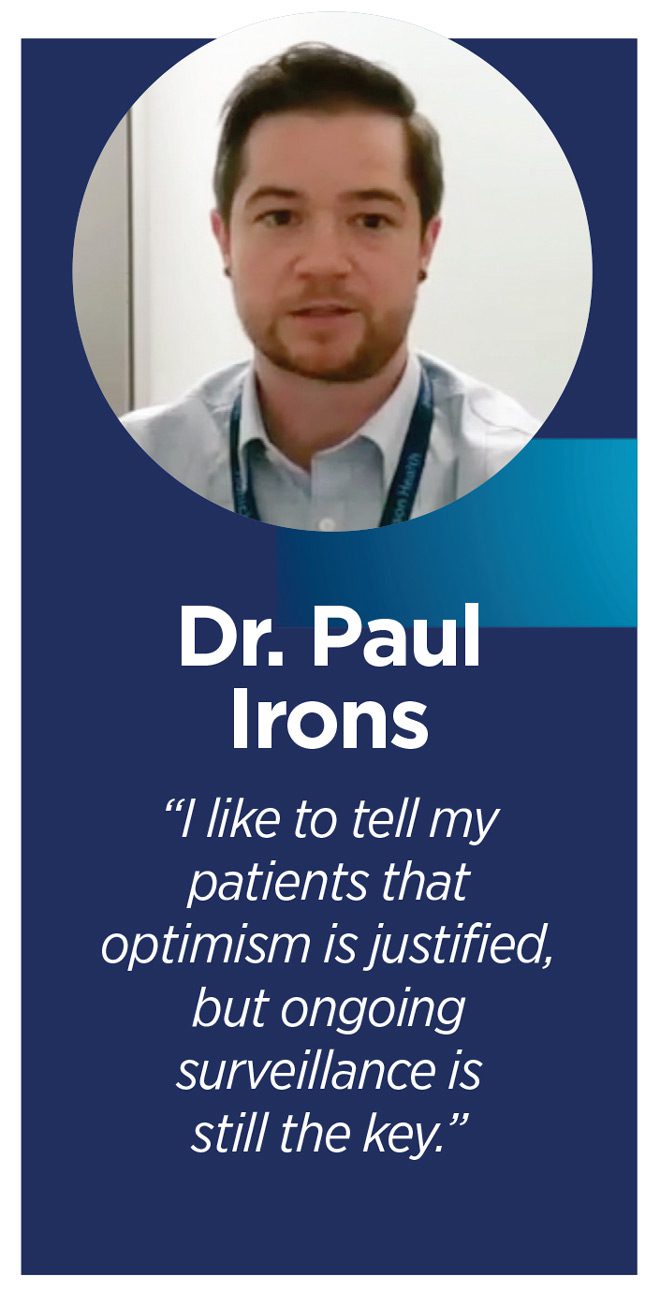
I like to tell my patients that optimism is justified, but ongoing surveillance is still the key.
Dr. Paul Irons
Risk factors
Some risk factors are age and family history. As men get older, they might talk to their friends or family members who have been diagnosed with either benign prostate issues or prostate cancer, and then they realize, “Oh, I should get screened for this.” Another risk factor is race. This typically does affect African American men more.
Dr. Paul Irons
Treatment
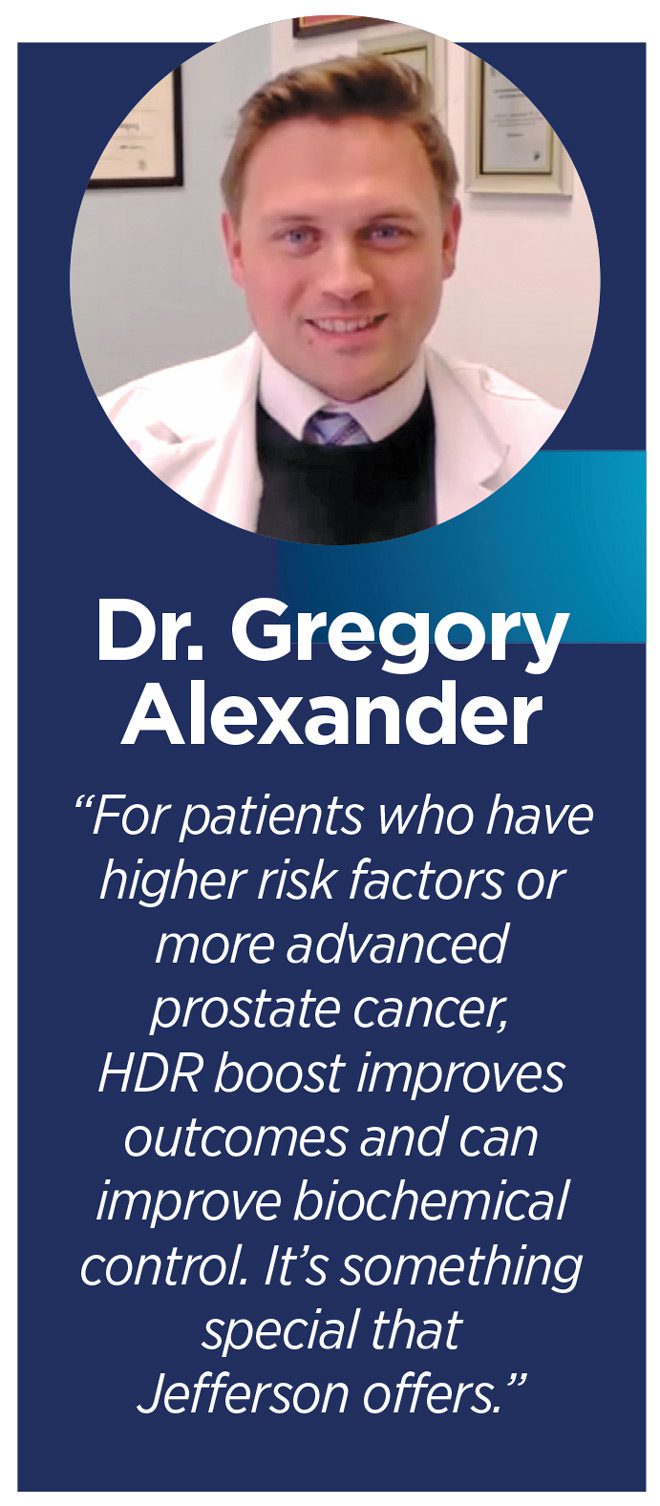
At Jefferson, we have the option of doing high dose-rate brachytherapy, or what’s called HDR boost, for patients with high-risk prostate cancer. Patients undergo sedation, and an ultrasound probe is used to help guide the radiation. Basically, needles are used to introduce catheters into the prostate, and then we have something called an HDR afterloader, which introduces a radioactive source into the prostate. That radioactive source goes through these channels, delivers the radiation, and then is removed from the patient. For patients who have higher risk factors or more advanced prostate cancer, HDR boost improves outcomes and can improve biochemical control. It’s something special that Jefferson offers.
Dr. Gregory Alexander
For aggressive cancers that are localized and need treatment, we discuss surgery or radiation. The main surgery is a radical prostatectomy, done with the da Vinci robot. It’s highly effective with cure rates over 90%. We remove the entire prostate and seminal vesicles, then reattach the urethra to the bladder. A catheter stays in for about a week to let that area heal. It’s about a three-hour surgery – in experienced hands, sometimes as short as an hour and a half. Most patients stay one night and go home the next day.
Dr. Andre Miranda
At Jefferson, we have a new technology called adaptive radiation therapy that allows us to change a patient’s radiation plan in real time. Previously, if there were changes in the patient’s anatomy – because of an increase or decrease in the size of the prostate gland – the patient might need a treatment break in order to deliver the appropriate radiation therapy to the target while protecting the normal organs. Adaptive radiation therapy allows us to change that plan in real time, with the patient on the table so they don’t need to take that break. It allows us to adjust for that anatomy change, so we can safely treat what we need to treat.
Dr. Tamara LaCouture
In medical oncology, we often talk about hormone therapy. Prostate cancer is a very hormone-driven cancer. The largest testosterone factory in our body comes from the testicles, and there’s a signal from the brain telling the body to produce it. One of the hormone agents I use cuts off that signal – reducing testosterone and removing the stimulus for the cancer to grow.
Dr. Andrew Iskandar
Side effects of treatment
The prostate has muscular sphincters on either side, right under the bladder, that help you keep urine in when you cough or sneeze. When you remove the prostate, you can’t guarantee those won’t be affected. Most men will have some urine leakage once the catheter is removed, but as you move further from surgery it typically decreases significantly. We recommend Kegel exercises or pelvic floor physical therapy. If it remains a larger issue at 12 to 18 months, we have surgical options – male slings or artificial urinary sphincters. Most men get down to zero to one or two pads per day within six to twelve months.
Dr. Paul Irons
The nerves that carry information for erectile function run very closely alongside the prostate. During surgery, our goal is to brush those nerves away and remove just the prostate, but moving them to the side can cause some bruising and trauma. Right after surgery, I tell patients not to expect any sexual function, and that’s normal. For younger men with good baseline function, most recover within six months to a year, possibly with some help from medications like Viagra or Cialis. It is possible that some patients won’t fully recover their sexual function but even for those patients, there are surgeries and other treatments available. It is totally treatable.
Dr. Andre Miranda
The risk of urinary incontinence post radiation is about 1-3% long term for patients. About 25-50% of men will have some difficulty with erections after radiation, but that is often a delayed response, unlike surgery, where that happens almost immediately, depending upon the surgery technique.
Dr. Tamara LaCouture
For the majority of patients treated with radiation therapy, those who had a good quality of life before treatment generally continue to enjoy most of their normal activities. The risks and side effects of radiation are very different from those of surgery.
Dr. Gregory Alexander
Cancer Myths
I get asked, “Does the radiation stay in my body?” The way I describe it to patients is that the cancer cells hopefully will carry the damage the radiation has done with them over time. The radiation itself does not stay in the body, so patients don’t have to wait for it to clear.
Dr. Tamara LaCouture
One myth I hear is that all prostate cancers are aggressive – which is very untrue. There are slow-growing prostate cancers that may never become an issue and may never require treatment; they just need to be watched. Another myth is that a normal PSA means you don’t have prostate cancer. Unfortunately, that’s not always the case.
Dr. Paul Irons
A common myth is that after receiving radiation, you can’t have radiation a second time. In the right clinical situation, we can often do a second course – either with adaptive planning on the Ethos machine or with brachytherapy or a standard Linac. Another myth is that surgery can’t be done after definitive radiation. In the right context, it can be done, though it’s uncommon.
Dr. Gregory Alexander
A big myth is that every patient is going to have incontinence or lose their ability to have an erection after treatment. That fear keeps patients from getting diagnosed and seeking care. The reality is not everyone has those outcomes – and even for those who do, there is a lot we can offer.
Dr. Andre Miranda
Discrepancies in care
We know that 44% of all new cancers are prostate cancer in Black men. We also know they die at a rate nearly double that of other men. We want to educate our patient population to improve access for testing, so patients are diagnosed at an earlier stage. We have also changed our screening recommendations for Black men: Patients with a first degree relative in particular should start screening about 10 years earlier than their white counterparts.
Dr. Tamara LaCouture
One of the biggest things I try to do through Jefferson is volunteer to do educational seminars. Among patients with an African American background or a low socioeconomic status, there’s a large mistrust in the healthcare system. My goal is to educate and earn back some of that trust, because patients who’ve been wronged in the past don’t deserve any less than the best care possible. Trying to break down those disparities is a huge goal of Jefferson, and the only way we can do so is by taking the pieces that fell apart and slowly building them back up.
Dr. Andrew Iskandar
Studies show that Black men, and men from lower socioeconomic backgrounds, can have more aggressive disease, and when they are diagnosed the cancer may be more advanced. There are some studies that show access to treatment also varies. These disparities are especially significant – this is unfortunately a reality.
Dr. Andre Miranda
Mental health after the diagnosis
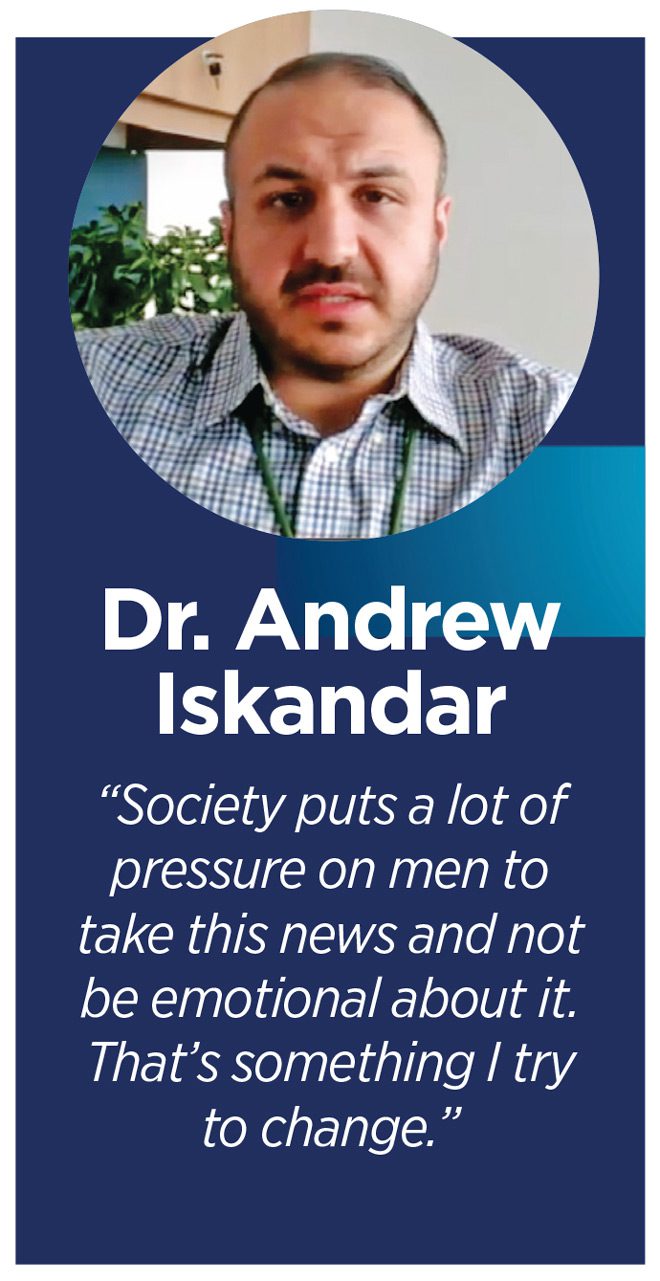
Mental health issues in this space are underdiagnosed. Society puts a lot of pressure on men to take this news and not be emotional about it. That’s something I try to change. At Jefferson, we have a psychiatrist who specializes in cancer psychology and works with our patients to help them process their feelings. The hormone therapy I provide can also take a toll on mental health, and I always try to gauge how my patients are doing. If they tell me they’ve been depressed or anxious, I let them know they’re not alone and they deserve to be heard.
Dr. Andrew Iskandar
Any cancer diagnosis can weigh heavily on patients. We all have so many things going on that when you add a cancer diagnosis to it, it’s huge. Jefferson has nurse navigation and patient outreach services to help with scheduling appointments, imaging and transportation. We have support groups as well. It’s a huge team effort to help with the mental health part of this diagnosis.
Dr. Paul Irons
Men can get really depressed or anxious with this diagnosis. Concerns about sexual function and urinary leakage can be embarrassing and take a toll on mental health. We try to check in with patients and make sure they are doing ok. When needed, we refer them to therapy and counseling. At Jefferson, we even have sexual therapy we can refer patients to.
Dr. Andre Miranda
What men should know about prostate cancer
Make sure you’re getting your screening. If this isn’t something you have spoken about with your primary care doctor, make sure they’re adding that to your annual lab work.
Dr. Paul Irons
Care should always be individualized. What your friends or siblings have gone through may not be the right thing for you.
Dr. Andrew Iskandar
There are a lot of treatment options available, and I would encourage men to explore all these options before committing to a treatment decision.
Dr. Gregory Alexander
Message to a man newly diagnosed with prostate cancer
This is survivable, and you can have an excellent quality of life.
Dr. Tamara LaCouture
Take a breath. There’s time.
Dr. Andrew Iskandar
There are many treatment options and highly effective strategies to help control your disease.
Dr. Gregory Alexander
Make sure you’re being seen at a good medical system that has all the treatment options. This is a diagnosis that is going to follow you lifelong, so make sure you have a really good team behind you to go through the diagnosis, treatment and any complications, if they arise.
Dr. Andre Miranda
You don’t need to rush into a treatment decision. We’re here to help you work through that decision.
Dr. Paul Irons