



See what it was like to live in South Jersey over the centuries with these local historic homes.
Cherry Hill
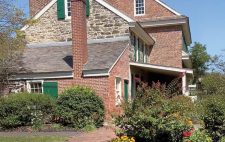
Built in 1816, Barclay Farmstead was home for Quaker farmer Joseph Thorn and a fully functioning, 32-acre farm. Tours of the farm are available on Wednesdays and first Sundays, free for Cherry Hill residents ($5 for non-residents), and Plant-A-Patch garden plots are available.
Fieldsboro
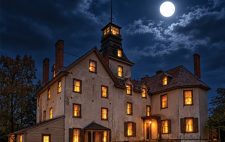
Built before the Revolutionary War, the White Hill Mansion has a haunted history featuring a mysterious drowning, an army invasion and lots of ghost stories. Historic tours are held on select weekends for $10, and ghost hunts are held throughout the year.
Eastampton
Dating back to the mid-1800’s, Historic Smithville Mansion was built as the centerpiece of the thriving printing village. The town was sold in 1865 and later became an industrial town. Tours of the mansion are available Fridays and Sundays at noon, 1 pm and 2 pm for $10 (cash only).
Moorestown
The oldest house in Moorestown, the Smith-Cadbury Mansion was built in 1738 as the centerpiece of a farm, and is thought to have been built on the foundation of an even older home. The building now houses The Historical Society of Moorestown, and tours are available on Tuesdays and the 2nd and 4th Sundays of each month.
Hamilton
This bungalow-style home was built by Frederick Sayen in 1912, near his family’s rubber mill, and surrounded with plants and flowers he had collected while traveling the world. Today, visitors can explore the gardens with more than 250,000 flowers, walking trails and fish ponds for free every day.
Batsto
Batsto Village came alive in 1766 when Charles Read built Batsto Iron Works along the Batsto River, and the main residence was expanded to a mansion in 1876 by Joseph Wharton. The mansion is surrounded by a village that started as an ironworks village, then became a glassmaking village before declining. Guided tours are available Wednesday through Saturday for $3.
Glassboro
Built in 1847, Hollybush Mansion was built by Thomas Whitney on 100 acres of a landscaped park. It was sold in the early 1900s to Glassboro residents who wanted to bring higher education to the town. They gave it to the state to establish the Glassboro Normal School which would later become Rowan University.
Vineland
During the Great Depression, George Daynor bought land in Vineland for a dollar an acre without seeing it. Then, he built a castle made of junk in the middle of a swamp. That castle has been restored and now visitors can explore the unique structure.