

South Jersey Visionary: Virtua Health
At Virtua Health, growth and technology are not positioned as forces that distance clinicians from patients. Instead, they are used to reinforce connection – an approach that reflects how the organization is rethinking the relationship between scale and personalization, says Dr. John Matsinger, executive vice president and chief operating officer at Virtua Health.
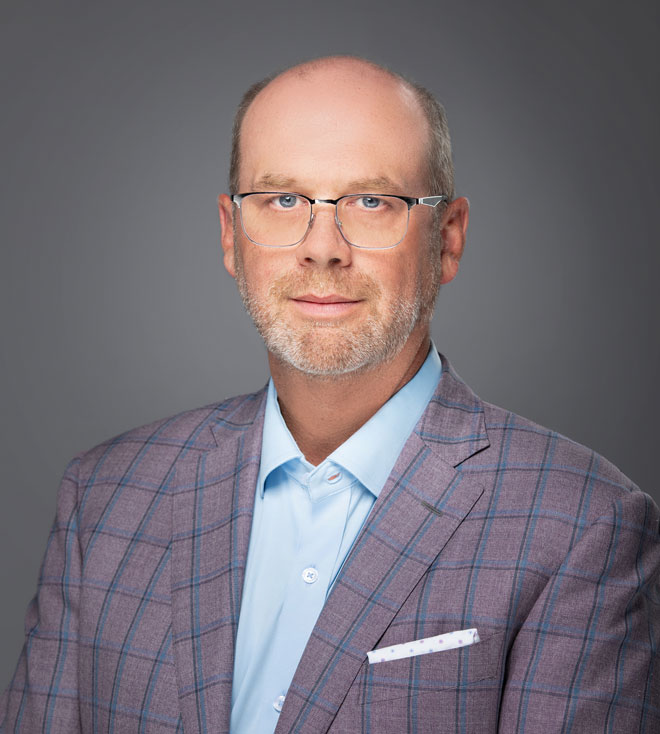
Dr. John Matsinger, Executive Vice President and Chief Operating Officer
“As health systems grow, there’s a legitimate concern that care can start to feel impersonal or transactional,” he says. “But used correctly, that’s not necessarily the case.”
“Technology is never going to replace people. Humans are at the heart of healthcare, and when it’s used the right way, technology can actually restore some of the humanity that’s been lost.”
At Virtua, he says, that concern has shaped a deliberate strategy. “We’ve taken the opposite view – we believe scale should actually make care more personal, not less,” he says. “Growth gives us the ability to invest in technology, talent and different care models that free clinicians up to focus on the individual in front of them.”
That philosophy is rooted in what patients expect from care. “Patients want to be known, to be heard and to be respected,” he says. “We believe technology can actually help us do that by taking some of the more mundane tasks off providers, so they can spend more time focused on the patient.”
As that technology increasingly includes artificial intelligence, he says the organization is mindful of both its potential and the concerns it raises. “AI is not here to replace clinicians or the people caring for patients – it’s here to support them,” Matsinger says. “That’s where a lot of the concern comes from, and it’s understandable. We’re all experiencing AI in different parts of our lives, and it can make people nervous.”
That distinction reinforces the central role of clinical expertise. “Healthcare is, and always will be, grounded in professionalism – trust, empathy, and judgment. Those are things AI can’t replace,” he says. “Where AI can really help is in handling repetitive, administrative, and pattern-based tasks. By taking that work off clinicians, it gives them more time to think, connect and care for patients.”
One way this approach is showing up in practice is through real-time clinical support during procedures. “We use a tool called GI Genius,” says Matsinger. “It’s built on data from millions of procedures, and it supports the clinician in real time.”
Rather than altering the clinician’s role, he says, the system enhances it. “During a colonoscopy, the gastroenterologist is performing the procedure just as they normally would,” he says. “What this technology does is layer visual support on top of that, flagging areas that may not look normal and prompting the clinician to take a closer look.”
At the same time, it allows for deeper interaction with data. “The clinician can focus on a specific area and use the technology to get additional insight,” he says. “So you can think about it as having access to the collective learnings from millions of prior procedures right at your fingertips.”
While AI is reshaping clinical decision-making in some areas, it is also being applied to one of the most persistent sources of clinician burden: documentation. To address that, Virtua has adopted ambient listening technologies that change how notes are created. “With ambient listening, the conversation itself generates the clinical note automatically through a microphone,” he says. “That allows the clinician and patient to actually engage with each other, while the documentation is created in real time and entered directly into the electronic medical record.”
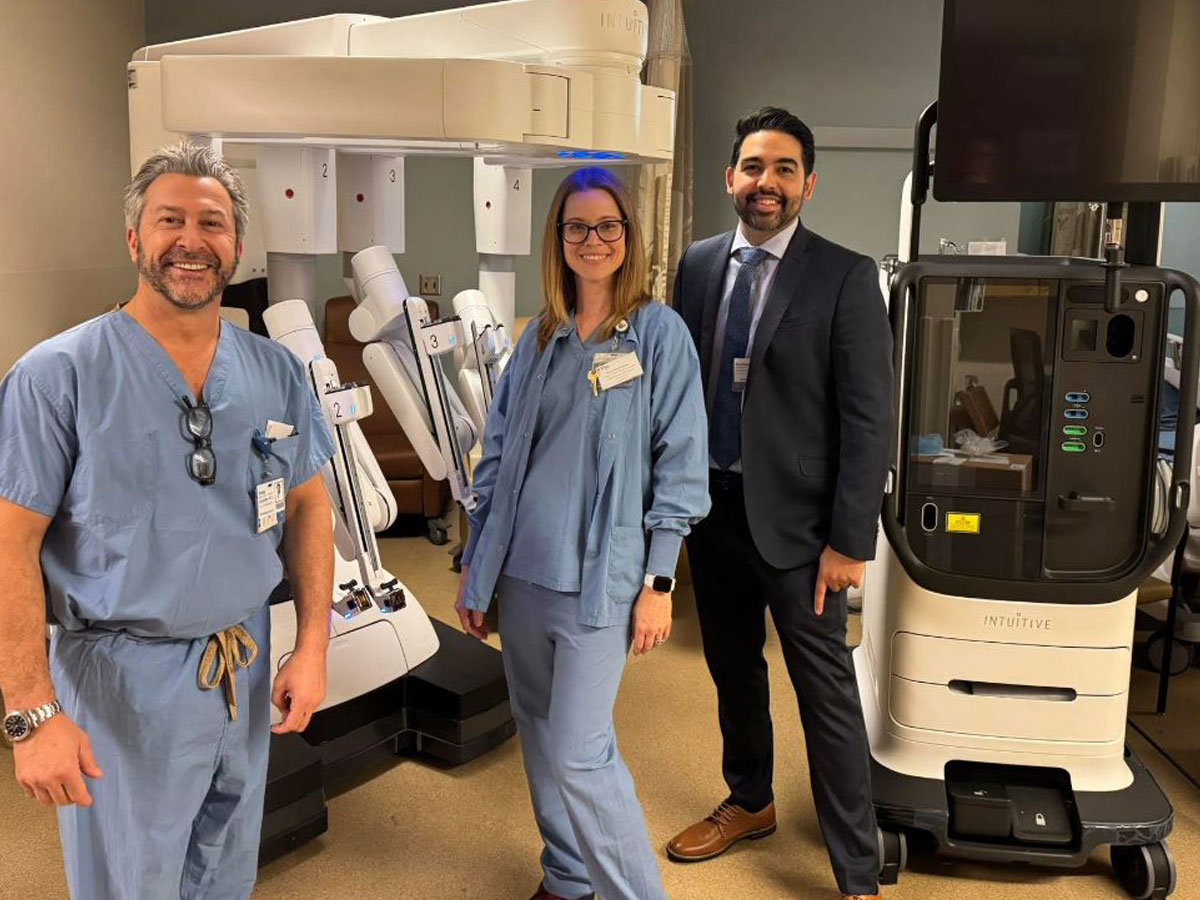
Alongside these workflow improvements, the organization has continued to invest in advanced surgical technologies that expand what clinicians can do. “We’ve been doing robotic surgery for over 20 years, so we were really early adopters in this space,” says Matsinger. “Today, we have one of the larger programs in the area – we’re performing thousands and thousands of robotic surgeries.”
Those systems, he says, enable a different level of care. “These systems allow our surgeons to operate with greater precision, using minimally invasive techniques that can lead to faster recovery times,” he says.
Even so, he emphasizes that the clinician remains central to every procedure. “I always want to be clear: the robot is not doing the surgery – the surgeon is,” he says. “The technology is there to augment the surgeon’s skill and technique, not replace it.”
As these technologies evolve, they are also reshaping where care is delivered, extending it beyond traditional clinical settings. “Back in January 2022, we launched our Hospital at Home program,” says Matsinger. “Today, we’re treating about 60 different diagnoses that would have traditionally required a hospital stay, but patients now have the option to receive that care in their own homes.”
That model combines in-person care with virtual connectivity. “Physicians can connect via camera and, when needed, also see patients in person,” he says. “It’s really changed the way we think about delivering care.”
In doing so, it also redefines access. “For years, the front door of the hospital was the emergency room. Then it became the primary care physician’s office,” he says. “Now, we believe the front door of healthcare is the patient’s home.”
That shift, he says, has a measurable impact on outcomes and patient experience. “We’re seeing fewer falls, fewer hospital-acquired infections and overall better outcomes,” he says. “People tend to do better when they’re in their own environment – when they’re with their loved ones, taking care of their pets and surrounded by the comforts of home.”
Taken together, these efforts reflect a broader view of technology’s role in healthcare – one that centers on its ability to support relationships rather than replace them. “Technology is never going to replace people,” says Matsinger. “Humans are at the heart of healthcare, and when it’s used the right way, technology can actually restore some of the humanity that’s been lost.”
That perspective continues to guide how Virtua evaluates innovation and its impact on care delivery. “We believe innovation should strengthen trust, deepen relationships and keep care focused on what matters most – the people we serve,” he says.