

Where You Go Matters for Your Breast Health. Choose the Experts.

When it comes to breast health, where you go matters. A lot.
Yes, scheduling your annual mammogram is important, but choosing the right place for that mammogram can shape everything that comes next: how quickly you get results, whether your care is personalized and how smoothly additional testing happens if it’s needed.
Because breast imaging shouldn’t feel like guesswork.
For Sherrill Little, M.D., D.A.B.R, a breast imaging radiologist at South Jersey Radiology, patients should know they have options, and they should choose wisely.
“When you have the conversation with your doctor about starting breast screening, it is important to know you have the choice on where to go for your imaging care,” she says.
The smartest choice? A center built to do more than just take pictures.
Comprehensive Breast Care, All in One Place
A mammogram is often the first step, but it shouldn’t be the only step a facility can handle.
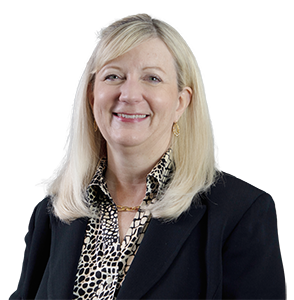
Sherrill Little, MD
“They need to go to an accredited facility that is a Breast Imaging Center of Excellence and provides comprehensive care,” she says. “That means the center can take care of everything you might need, from your screening mammogram through biopsies if necessary.”
In plain English: if something needs a second look, you shouldn’t have to start over somewhere else.
At SJRA, patients can move seamlessly from screening to follow-up imaging, ultrasound, MRI or biopsy if needed. That means faster answers, less stress and fewer logistical headaches.
“It means everything you might need can be taken care of in one place,” says Little.
That kind of comprehensive care also allows providers to personalize screening based on your individual risk, not just your age.
“We evaluate your overall lifetime risk of breast cancer,” she says. “It takes all that information and comes up with an estimate of what your overall lifetime risk of breast cancer is.”
That risk score factors in family history, hormones, reproductive history, and other health details. If someone is considered high-risk, additional screening such as breast MRI may be recommended.
And for women with dense breast tissue, another layer of imaging can make a real difference.
“The denser the tissue, the harder it is for us to see any changes that might indicate an early cancer,” she says. “They will sometimes recommend that you get a screening breast ultrasound as well.”
Translation: the best care is never cookie-cutter.
Expertise You Can Feel Good About
There’s a big difference between having imaging done and having it interpreted by specialists who focus on breast health every day.
That’s where subspecialized radiologists come in. They’re trained to spot subtle findings, understand patterns of change, and know when something is nothing or when it needs immediate attention.
“We all keep track of what’s going on in the literature, and we also go to national meetings,” says Little.
Why does that matter to patients? Because breast imaging is constantly evolving. New research, new tools, new best practices.
“It helps us make sure what we’re doing is appropriate, that we know what’s new and coming and that we stay up to date with everything that’s changing,” she says.
That expertise becomes especially valuable during diagnostic visits – when a patient has a lump, pain, nipple discharge or a screening exam that needs follow-up.
“The doctor will speak to them before they leave, give them their impression and results, and let them know if anything else is necessary,” says Little.
No endless waiting. No wondering what happens next. Just answers.
AI Is Here, And It’s Helping
Breast imaging is getting smarter, thanks to artificial intelligence tools like Profound AI®.
“The big things in mammography, or in breast imaging at this point, are AI,” she says.
These AI innovations partner with radiologists to improve early detection of breast cancer, and help analyze changes when compared to your last mammogram.
“It will give us a number from zero to 100,” says Little. “If it’s 100, that means the computer thinks there is something very suspicious. If it’s 10 or 15, that means the mammogram is probably fine.”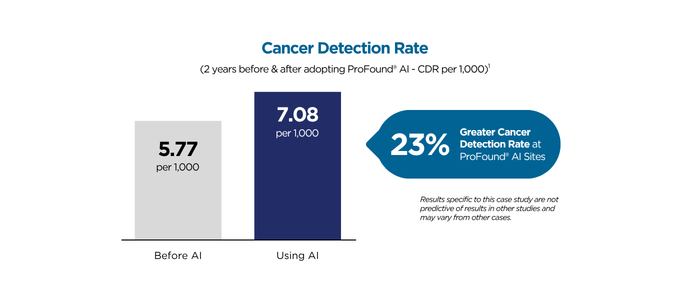
That can be especially helpful for women with dense breast tissue, where findings may be harder to see. AI adds another layer of insight and can support more personalized care while reducing unnecessary callbacks.
But Little is quick to point out: technology works best with experts behind it.
“I think it’s going to be a good tool, and it will help us enhance the standard of care we already provide to so many patients,” she says. “But it is important to understand this technology doesn’t work alone in a vacuum; it’s a collaborative process to ensure the highest level of accuracy in what we do.”
AI plus experienced radiologists, she says, is the sweet spot.
Don’t Wait
If there’s one takeaway, it’s this: screening saves lives, but only if you go.
“Mammography is the one that has been most studied and has evidence showing that it actually finds cancers and saves lives,” says Little.
And her message couldn’t be clearer.
“Early detection saves lives. That’s it,” she says. “And that means you have to get mammograms every year.”
So yes, book the appointment. But just as importantly, choose the experts that will make a difference in your care.