


Inspira Health: A New Chapter for New Moms
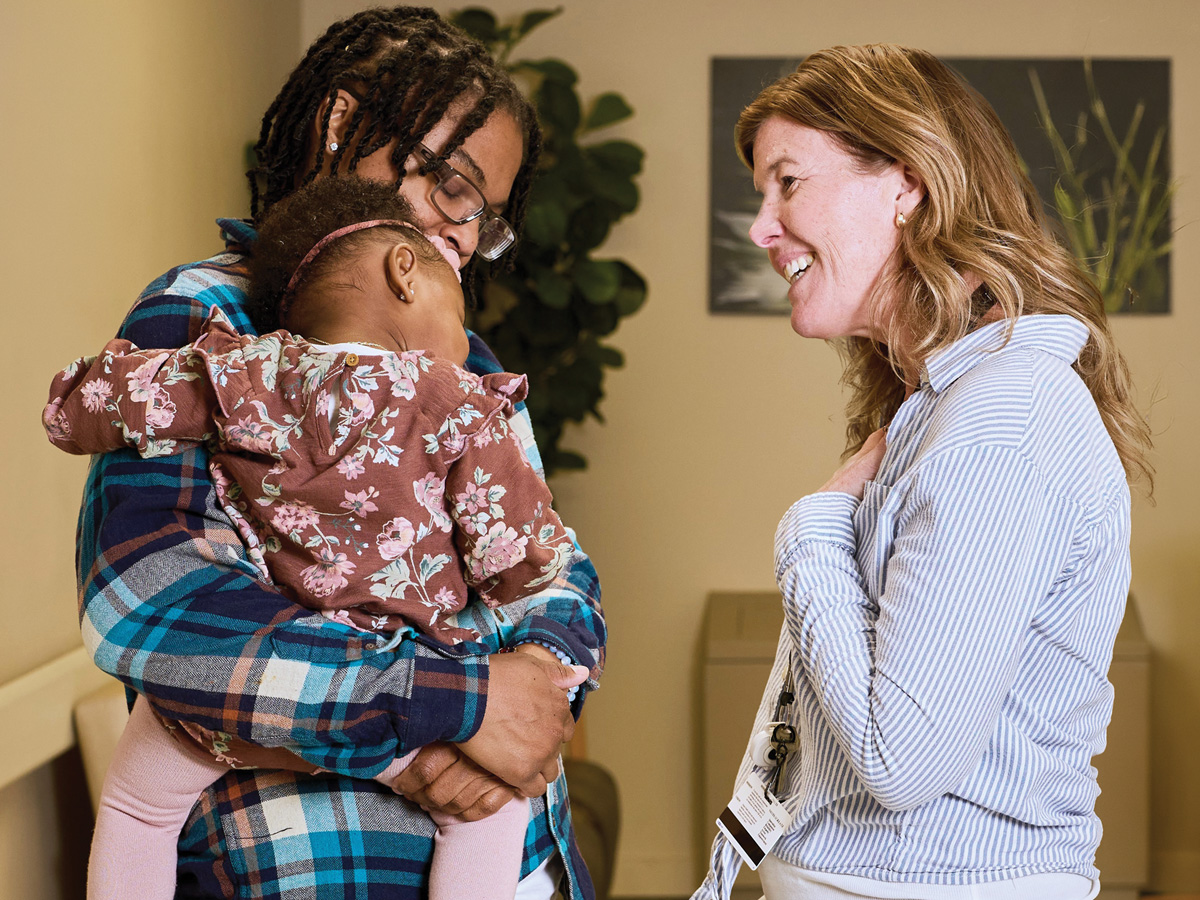
Allison Lant, perinatal mental health therapist, with an Inspira patient
The goal is to create an ongoing continuum of care that meets patients wherever they are in their reproductive and parenting journey.”
Inspira Health’s Maternal Child Health Department is in the midst of transformation – not just through expanded facilities and new technology, but through a broader philosophy of care that places mothers, babies and families at the center of every decision.
A New Era for Maternity Care
At the center of that momentum is a major maternity expansion at Inspira Medical Center Mullica Hill. The hospital is preparing to open a brand new 20-bed postpartum unit designed specifically around healing, education, comfort and family bonding. While patients will still deliver in the hospital’s labor and delivery suites, they will now transition into a separate postpartum environment intentionally created to promote rest and recovery.
“Even as the physical footprint changes, the philosophy behind the care remains consistent,” says Christl Dooley, assistant vice president of Maternal Child Health Services at Inspira Health. “The new unit emphasizes couplet care, keeping mothers and newborns together in the same room with one dedicated nurse caring for both patients. The approach supports bonding while also improving breastfeeding success and continuity of care. The design itself reflects that priority, with spaces intentionally created to feel calm, restorative, and family centered.”
The hospital also continues to provide intermediate care nursery services for babies who need additional medical attention, making sure families can remain close to home while receiving specialized support.
Putting Patients at the Center Through TeamBirth

Christl Dooley
Alongside its facility expansion, Inspira has fully implemented its TeamBirth model of care, an initiative designed to make communication and shared decision making central to the labor and delivery experience.
Care teams conduct regular bedside huddles involving nurses, physicians, support staff, patients and family members.
“Rather than conversations happening behind closed doors, patients are actively included in updates to their care plans throughout labor and delivery,” Dooley says. “The process gives families the opportunity to ask questions, voice concerns and participate more directly in decisions about care. The patient truly becomes the center of the care plan. Each room includes a huddle board used to keep everyone aligned on the progression of labor, changes in treatment plans and expectations moving forward.
The approach emphasizes transparency and teamwork, allowing providers to speak with patients as a united group rather than in isolated interactions throughout the day.
According to Dooley, patient satisfaction scores related to communication with nurses, communication with physicians and perceptions of teamwork have all improved substantially.
“For patients, the experience can feel more empowering during one of the most vulnerable moments of their lives,” she says. “Rather than feeling like care is happening around them, families become active participants in the process.”
Expanding Maternal Mental Health Support
“Maternal mental health is the number one complication of pregnancy,” says Allison Lant, a licensed clinical social worker and outpatient therapist certified in perinatal mental health with Inspira’s Behavioral Wellness Center.
This fact prompted Inspira’s Behavioral Wellness Center to formalize and expand perinatal mental health services. Designed to support patients throughout the full reproductive journey, the services address everything from fertility challenges and pregnancy anxiety to postpartum depression, birth trauma, miscarriage, stillbirth and infant loss.
By expanding local neonatal capabilities, Inspira allows parents to stay connected to both their babies and their support system.” -Christl Dooley
The department has worked to simplify access to care by removing many of the barriers that often prevent patients from seeking support. Rather than requiring patients to navigate lengthy intake systems, Inspira’s providers can directly connect patients with the mental health team.
Patients can attend therapy and medication management appointments through telehealth and in-person visits in Bridgeton or Glassboro. “The department intentionally refers to these offerings as perinatal mental health services rather than a program, because support does not begin or end at one specific point in pregnancy,” says Lant.
“Instead, the goal is to create an ongoing continuum of care that meets patients wherever they are in their reproductive and parenting journey.”
A major focus of the work is helping patients feel less isolated in experiences that are often difficult to discuss openly.
Therapists regularly support patients dealing with anxiety, intrusive thoughts, exhaustion, ambivalence and the emotional pressures that can accompany pregnancy and postpartum life.
Community Partnerships Removing Barriers to Care
Inspira’s maternal child health efforts increasingly extend beyond hospital walls through partnerships aimed at addressing transportation, education and labor support.
Through a grant and collaboration with Uber Health, Inspira launched a transportation initiative that helps patients travel to prenatal appointments, postpartum visits, NICU visitation and even food pharmacy services. Since launching in late 2025, the program has already enrolled more than 70 patients.
“For families with babies in neonatal intensive care, transportation can become one of the biggest barriers to bonding and involvement,” Dooley says. “Keeping services local while also helping families physically access care can dramatically improve both outcomes and emotional support systems.”
The department is also strengthening partnerships with community doulas throughout Cumberland County. Doulas completing clinical training at Inspira Medical Center Vineland and Mullica Hill hospitals will work alongside patients during labor and postpartum recovery, providing emotional support and advocacy distinct from clinical nursing care.
“These programs reflect a broader understanding that maternal health outcomes are influenced by much more than clinical medicine alone,” she says. “Transportation access, emotional support, education and continuity of care all play critical roles in keeping families healthy.”
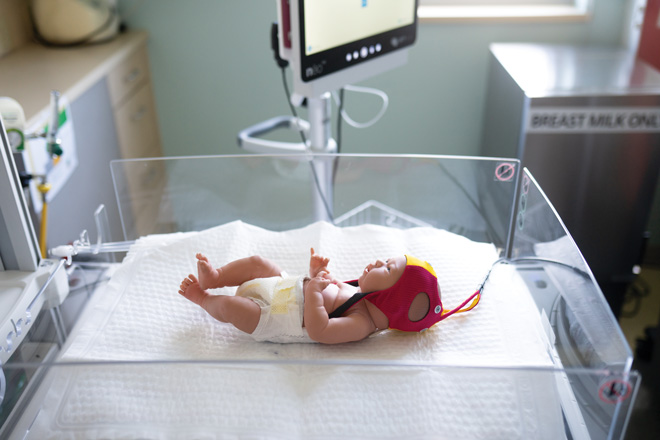
A new brain monitoring system is one of several new technologies introduced in the NICU
Advanced Neonatal Care Closer to Home
Another major focus for Inspira is expanding advanced neonatal care so families can remain close to their communities during medical crises. At the Deborah F. Sager NICU in Vineland and the Intermediate Care Nursery in Mullica Hill, families now have access to increasingly sophisticated neonatal services without traveling far from home.
This year, Inspira introduced therapeutic whole-body cooling, advanced brain monitoring technology through aEEG and neonatal MRI capability – technologies typically associated with larger regional systems. These advances allow more critically ill babies to remain within Inspira’s network while receiving highly specialized treatment. “For families, staying local matters,” says Dooley. “Transportation challenges can make visiting hospitalized newborns extraordinarily difficult, especially in more rural or underserved areas. By expanding local neonatal capabilities, Inspira allows parents to stay connected to both their babies and their support systems during emotionally overwhelming situations.”
“Across every initiative, Inspira’s Maternal Child Health Department is building a system centered on connection,” she adds. “The emphasis is not only on clinical excellence, but on ensuring patients feel informed, supported and cared for throughout every stage of pregnancy, birth and postpartum life.”
 inspirahealth.org

1-800-INSPIRA (800-467-7472)