

How Camden Is Rebuilding – One Home at a Time

For many homeowners, the first sign of trouble begins quietly. A drip from the ceiling after heavy rain. A draft that slips through old windows every winter. Flickering lights caused by outdated wiring. A bathroom that has become difficult for an aging resident to use safely. These are the kinds of problems that can feel manageable at first – until they aren’t.
In older cities, small maintenance issues can quickly become expensive emergencies, placing enormous pressure on families already balancing mortgages, taxes, utilities and everyday costs.
That is exactly where Camden Community Partnership’s Camden Home Improvement Program steps in.
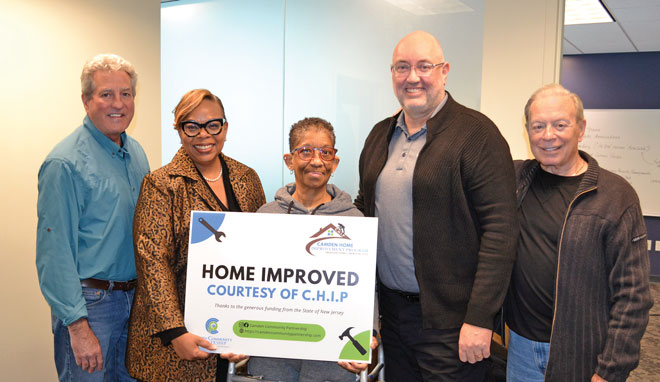
The initiative is designed to help qualified homeowners make critical repairs, improve safety, increase energy efficiency and preserve the homes that anchor Camden’s neighborhoods.
“The Camden Home Improvement Program is really about creating stability for families and neighborhoods,” says Dana Redd, president and CEO of Camden Community Partnership. “It’s not just about fixing roofs or replacing windows – it’s about helping people feel secure in their homes.”
A home is never just a structure, she says. It is where children do homework, where seniors hope to age with dignity, where families gather and where neighbors build community over years and decades. When a house falls into disrepair, the consequences extend beyond walls and windows. Stress rises. Safety declines. Families can feel trapped by problems they cannot afford to solve.
Camden Community Partnership views housing preservation as one of the most direct ways to improve quality of life. The nonprofit’s broader mission focuses on neighborhood revitalization, sustainability and growth throughout the city, and the Camden Home Improvement Program is a key part of that strategy.
“The Camden Home Improvement Program is really about creating stability for families and neighborhoods. It’s not just about fixing roofs or replacing windows – it’s about helping people feel secure in their homes.”

“Because we believe that when you invest in a house, you’re really investing in the entire block and, ultimately, in Camden’s future,” says Redd.
It is an idea urban planners have long understood: stable homes help create stable neighborhoods. When residents can maintain their properties, streets feel stronger, property values hold and communities become more resilient. A repaired roof or safer electrical system may seem like a private improvement, but the ripple effects are public, she says.
This latest chapter of the program is powered by significant state support. The New Jersey Department of Community Affairs committed $8 million over two years, including $5 million in 2024 and $3 million in 2025, to continue and expand the work. That funding allows qualified Camden homeowners to receive up to $25,000 per property, with $22,000 as a base allocation and an additional $3,000 in contingency funding when needed.

Tasha Gainey contract signing.
Those numbers matter because they turn hope into actual repairs. For many households, a major plumbing failure or roof replacement can be financially impossible without assistance.
“With up to $25,000 available per home, what we’re able to do through the Camden Home Improvement Program is go beyond surface-level repairs and make meaningful improvements,” says Redd. “That means addressing structural issues, improving safety and making sure homes are more energy efficient so families can truly feel the impact.”
“CHIP has been a game-changer for Camden, and we are thrilled to bring this program back,” says Camden Mayor Vic Carstarphen. “Our city faces unique challenges in maintaining and improving our housing, and CHIP provides a much-needed solution to help homeowners tackle essential repairs.”
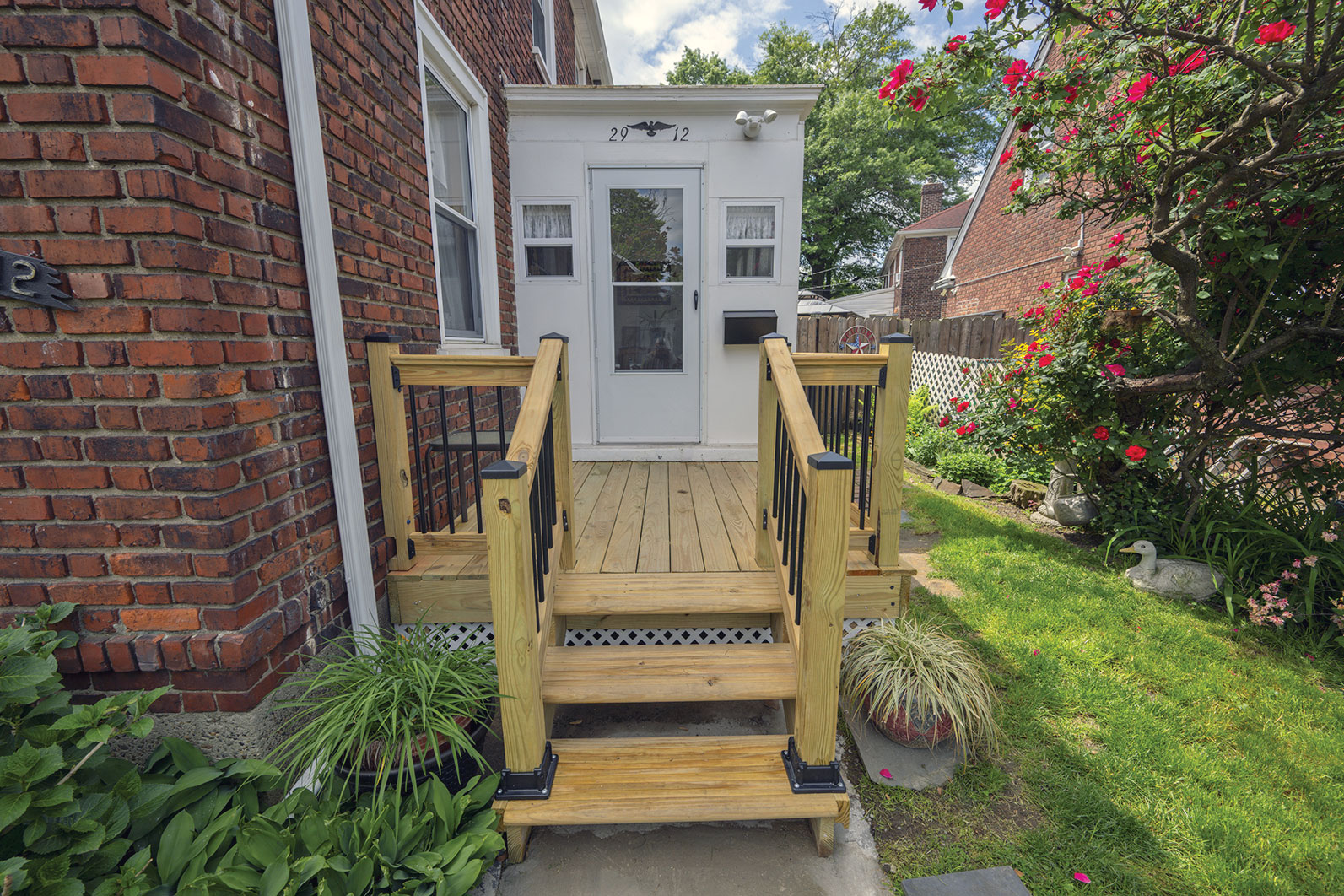 The phrase meaningful improvements is important, she says. This is not cosmetic work. It is not about fresh paint and curb appeal. It is about correcting problems that threaten comfort, affordability and safety.
Program assessments may include roofing, siding, masonry, electrical systems, plumbing, insulation, HVAC repairs, carpentry and other essential improvements. Homes are evaluated so resources can be directed where they are needed most.
That means one family might receive a new roof that stops chronic leaks. Another might get updated wiring that reduces fire hazards. Another may finally have working heating equipment before winter arrives.
“As someone who cares deeply about being rooted in Camden, I am thankful for a program that enables longtime residents to improve their homes without fear of displacement or financial burden,” says Naima Perry, a Camden resident who just completed repairs on her home. “It is a thoughtful, well-managed, resident-centered initiative that delivers real results and helps strengthen our community one home at a time.”
Redd says she has seen a wide variety of repairs underway.
“We are seeing repairs to plumbing, roofs and windows, as well as electrical repairs,” she says. “Those categories may sound ordinary, but anyone who has faced a major home repair knows how life-changing they can be. A roof leak can damage ceilings, walls and personal belongings. Faulty plumbing can create mold or water damage. Broken windows can drive heating costs higher every month.”
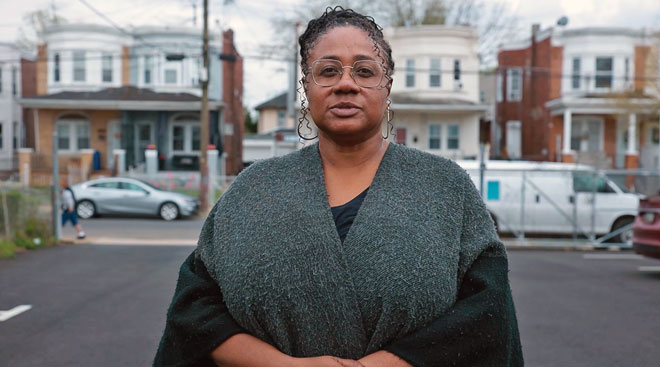
Camden resident Indya Walker.
Programs like this are also about fairness, Redd says. Cities across America often celebrate major downtown investment while longtime neighborhoods wait to feel the benefits. Camden Community Partnership has been explicit that revitalization should be citywide.
“It’s important to Camden because we want to make sure residents are experiencing inclusive prosperity – that they are included in what’s happening and feeling the impact in their neighborhoods,” says Redd. “With all of the public- and private-sector investment, we want to make sure revitalization happens across the city, not just downtown or along the waterfront.”
That phrase “inclusive prosperity” captures a central challenge for modern redevelopment. Growth means little if it bypasses the people who stayed through harder years. Camden’s homeowners, many of whom maintained their properties through decades of economic strain, deserve to be part of the city’s next chapter, says Redd.
And many clearly want to be.
“It’s clear that homeowners are ready to invest in their properties – they just need a little support to do it.”

“This is a program that really addresses a need that can be very costly for homeowners in urban centers,” she says. “It’s clear that homeowners are ready to invest in their properties – they just need a little support to do it.”
“We reject the tired assumption that struggling neighborhoods suffer from a lack of pride,” Redd adds. “In many cases, what residents lack is not commitment – it is access to capital.”
The demand for the program confirms that point. Applications came in at a high volume, demonstrating strong interest from residents across the city.
“That residents are proud to call Camden home, and they want to make sure they are part of the resurgence and revitalization happening across the city,” she says.
When demand exceeds available funding, trust in the process becomes crucial. The Partnership says it uses a computer-based selection system so qualified homeowners have an equal opportunity to participate.
“We want to make sure the process is fair,” says Redd. “Because we’ve had great demand, we are using a computer-based system so that every qualified homeowner has an equal opportunity to participate, regardless of where they live in the city.”
That citywide approach reflects the understanding that every neighborhood deserves attention, not just the most visible corridors.
The program also includes a partnership with Saint Joseph’s Carpenter Society, which provides lead remediation at no additional cost to homeowners or the program itself. In older housing stock, lead hazards can be both dangerous and expensive to address, especially for families with young children. The program is not only preserving homes, says Redd, but also improving health conditions for residents.
Affordability is another major issue. Rising utility costs have become a burden for households everywhere, and older homes often lose heat or cool air through poor insulation, drafty windows or aging HVAC systems.
“This provides for long-term affordability with upgrades like insulation, HVAC systems and windows that help lower utility costs and make homes more comfortable,” she says. “We are seeing rising utility costs across the state and certainly across the nation. That’s why this program is more important now than ever.”
That means the benefits can continue long after construction crews leave. Lower monthly bills can help families build savings, stay current on taxes or simply breathe easier.
The Camden Home Improvement Program also has roots in earlier success. It was first introduced in the early 2000s under the Municipal Rehabilitation and Economic Recovery Act, when $8 million was allocated to launch the initiative. Those earlier resources helped more than 400 Camden homeowners receive life-safety upgrades.
Now the model has returned because the need remains real.
“As someone who cares deeply about being rooted in Camden, I am thankful for a program that enables longtime residents to improve their homes without fear of displacement or financial burden.”

“We brought this program back a couple of years ago because it was so successful in the past, but also because we were seeing the need across the city,” says Redd. “Homeowners wanted to stabilize their properties and address major structural issues that can be very costly.”
The current goal is ambitious: complete upgrades to more than 300 homes with available funding, while continuing to seek new dollars for future phases. For residents, that means this is not envisioned as a one-time gesture. It is part of a longer commitment to neighborhood development.
Camden Community Partnership connects the initiative to its larger strategic priorities, which include neighborhood development, economic development and promoting Camden as a place to live, invest and visit.
“To see where Camden was and to see how far Camden has come, I’m really excited about the future of our city,” says Redd. “I’m excited for our residents, our citizens and our youth. We are trying our best to make Camden as vibrant as we can for the people who live here. And they believe, because they’re seeing change happen – but they’re also part of that change.”
“They’re starting to believe that Camden has an opportunity to thrive and become what I would call the shining urban anchor in the state of New Jersey,” she adds.
“I can’t express how much this means to me,” says Indya Walker, a Camden homeowner benefiting from this new round of CHIP funding. “Our city faces unique challenges in maintaining and improving our housing, and CHIP provides a much-needed solution to help homeowners tackle essential repairs.”