


Camden County Board of Commissioners: Camden’s Summer Without Loss

For the first time in half a century, the City of Camden experienced a summer without a single homicide.
In a community long defined by its struggle with violent crime, the milestone marked more than just a seasonal statistic. It represented the culmination of more than a decade of strategy, reform, partnership and persistence – a transformation that Camden County Commissioner Director Louis Cappelli Jr. says was built block by block, relationship by relationship.
“It took a lot of community outreach and community policing to get to this point,” says Cappelli. “Thanks to the efforts of our officers, we now have a great relationship and partnership with the residents of the city – and through that partnership, a significant reduction in crime has taken place.”
The homicide-free summer was not an isolated achievement. It was part of a broader pattern. By the end of 2025, Camden recorded 12 homicides, down from 17 the previous year – a 29 percent decrease. Since 2012, killings in the city have fallen by 82 percent. Total crime has also steadily declined, with 3,120 incidents reported in 2025 compared to 6,108 in 2012, the final year of the city’s previous police department before the city switched to a community policing model. That marks a 49 percent drop in overall crime and a 53 percent reduction in violent offenses over that period.

Behind those numbers, Cappelli points to a deliberate philosophy: policing rooted in presence, familiarity and trust.
“It starts the minute our officers hit the streets,” says Cappelli. “They begin knocking on doors and introducing themselves to residents, letting them know they’ll be patrolling their neighborhood. We also have many officers walking the streets and engaging in activities with children, young adults and families. All of that builds a real sense of community that helps reduce crime.”
The Camden County Police Department, launched in 2013, replaced the city’s former department with a county-run force designed to expand staffing and adopt a neighborhood-based approach. Officers are assigned to specific areas and expected to become known faces. Instead of remaining in patrol cars, they are frequently on foot, interacting with residents not just during emergencies but in everyday life.
“It’s really all about the men and women of our police department who go out of their way every day to assist residents in ways that go far beyond policing,” says Cappelli.
“Community policing can show up in a lot of different ways,” he adds. “For example, checking in on seniors who may be living alone, occasionally shoveling a sidewalk for someone who’s having trouble getting in and out of their house or hosting movie nights with families in different parts of the city. Those are just a few examples of the great work they’re doing.”
The strategy has extended beyond crime response to proactive social support. A social worker program pairs licensed professionals with officers to assist residents facing mental health challenges, substance use disorders or homelessness. Instead of defaulting to arrest, police can connect individuals with appropriate services, helping stabilize situations before they escalate.
The department also partners with the Camden County Restorative Justice Hub at the Wiggins Center, providing structure and guidance to young people who may be at risk of violence. Through these collaborations, youth are redirected toward mentorship and accountability programs rather than deeper involvement in the justice system. Education and workforce development are central to the long-term plan.
“For example, at HopeWorks, many students are being trained in technology for future jobs,” says Cappelli. “We’re helping young adults find employment, which in turn helps reduce crime. When we see children heading in the wrong direction, we’re able to identify them and work with them to help straighten out their lives and get them moving in the right direction.”
The department also works alongside HopeWorks in addressing truancy, identifying students who have disengaged from school and connecting them to training programs that create a path to steady employment. The goal is to interrupt patterns that can lead to criminal behavior before they take hold.
“This is just one example,” says Cappelli. “The education children in the city are receiving is also improving through the Renaissance and charter schools. We’re seeing higher graduation rates and declining dropout rates.”
While policing reforms have been significant, Cappelli is clear that public safety cannot exist in isolation.
“There’s no doubt about it – it’s about creating economic opportunity for adults in the city, educating our children and making the city as safe as possible,” says Cappelli.
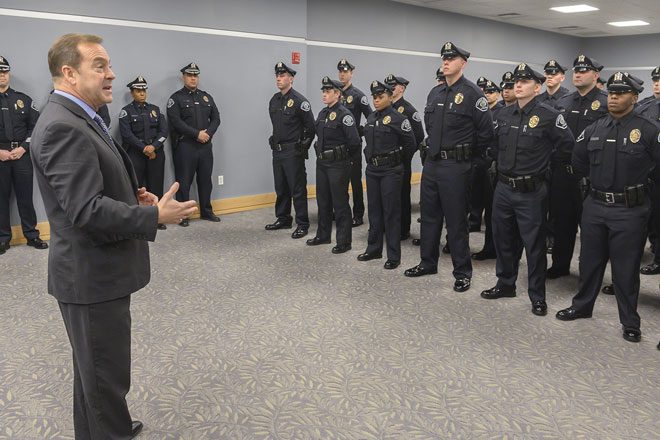
Violent crime overall declined 6 percent in 2025 compared to the previous year. Sexual assaults fell by 32 percent. Robberies dropped 12 percent. Total reported offenses decreased another 2 percent, continuing the downward trend that began more than a decade ago. Technology has also played an increasingly important role in maintaining those gains.
“What’s helping us now is the increased use of technology,” says Capelli. “We have drones that assist with public safety, in addition to the cameras and shooter detection systems installed throughout the city. Technology is a force multiplier that helps our police prevent and solve crimes.”
Surveillance cameras positioned across neighborhoods, gunshot detection systems and aerial support have enhanced response times and investigative capabilities. While critics in some cities question tools like this, Camden officials argue that technology supplements – rather than replaces – the human relationships built on the ground.
At the same time, community partnerships remain foundational. The department collaborates with organizations such as the Salvation Army, the Boys and Girls Club of Camden City, Rising Leaders, I Dare to Care, Guadalupe Family Services, the Cooper Foundation, the Sixers Youth Foundation and Mighty Writers. Together, they address food insecurity, organize diaper drives, host literacy programs and provide recreational opportunities for youth.
The department’s Village Initiative focuses specifically on children and senior citizens, offering activities that range from open gym sessions to bingo events for older residents. Officers assist seniors during severe weather, help with neighborhood cleanups and maintain regular outreach in vulnerable areas.
The transformation has altered how Camden is perceived both inside and outside its borders, say Cappelli.
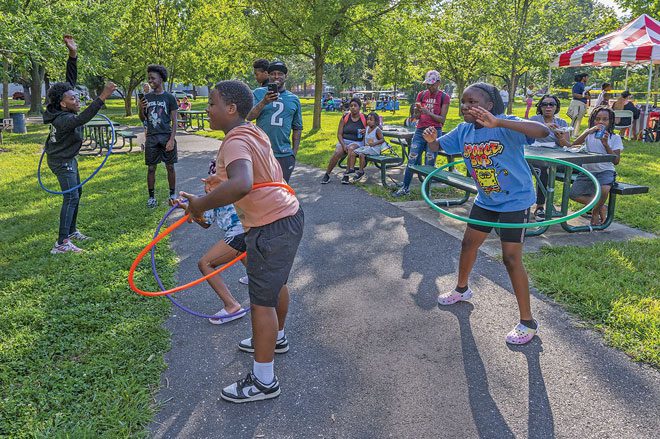
“I think the reputation of the city has certainly changed,” he says. “People are no longer afraid to work or live there. With this reduction in crime, we believe the next phase of development will be market-rate residential, and over the next few years, a substantial number of new homes for people at a range of income levels will be built in the city.”
For decades, Camden’s struggles overshadowed its assets: its waterfront location, proximity to Philadelphia and strong institutional anchors, he says. Now, officials say, safety improvements are creating conditions for new investment.
“That was always our goal – to bring the city back to its former glory, to make it safe, and to make it a vibrant community in each and every neighborhood,” says Cappelli. “With safety will come investment.”
Developers appear to be taking notice.
“We’re certainly getting a lot of inquiries from residential developers, and we hope to make some major announcements this year,” says Cappelli.
As housing expands, Cappelli expects small businesses to follow.
“Once we begin building new housing and adding more residents to the city, we’ll start to see many new small businesses open – restaurants, bars, laundromats, grocery stores – the kinds of businesses other communities enjoy,” says Cappelli. “We need to have those same types of small businesses in Camden.”
The connection between safety and economic vitality is direct, he argues. Fewer violent incidents mean more confidence among investors, employers and families considering a move to the city.
“It’s been great,” says Cappelli. “I’m so proud of the men and women of our department and so happy for the residents of the city.”
For Cappelli, the homicide-free summer carried personal weight. Nearly 13 years ago, when the county restructured policing in Camden, such a milestone seemed unattainable.
“When we started this journey almost 13 years ago it would have been hard for me to believe the amount of progress the men and women of this department have made. I was telling the Chief not long ago that a homicide-free summer would have been a pipe dream for us at the time,” he says. “That said, we still have a ton of work to do, and we all know that one homicide is too many in the city. We still have promises to keep and miles to go, but 2025 was a good year for the city of Camden, and one that it hasn’t seen since 1984.”
But, he says, there is still room for caution. Sustaining progress requires constant vigilance. One summer without a homicide does not erase decades of hardship, nor does it guarantee the future, he says.
“It brings joy to my heart to be a part of it,” says Cappelli. “We have a great team, and I see nothing but continued success moving forward.”
The work continues daily: officers walking beats, youth attending after-school programs, social workers responding alongside patrol units, community groups organizing events, developers drafting proposals. Each represents a thread in a broader effort to reshape Camden’s narrative.
“We’ll be especially excited once we’re able to announce new residential housing in the city – that’s something we’ll be very, very proud of,” says Cappelli.
“Camden’s first murder-free summer in 50 years did not arrive overnight,” he adds. “It grew from a long-term commitment to rebuilding trust, expanding opportunity and investing in people as much as policing.”

Camden Crime Statistics (2025)
First homicide-free summer in 50 years
29% decrease in homicides (17 in 2024 to 12 in 2025)
82% reduction in homicides since 2012
6% decrease in violent crime compared to 2024
32% decline in sexual assaults
12% drop in robberies
2% decrease in total crime
3,120 total crimes in 2025, down from 6,108 in 2012
49% reduction in total crime since 2012
53% reduction in violent crime since 2012

camdencounty.com