


Camden County: Breaking the Stigma
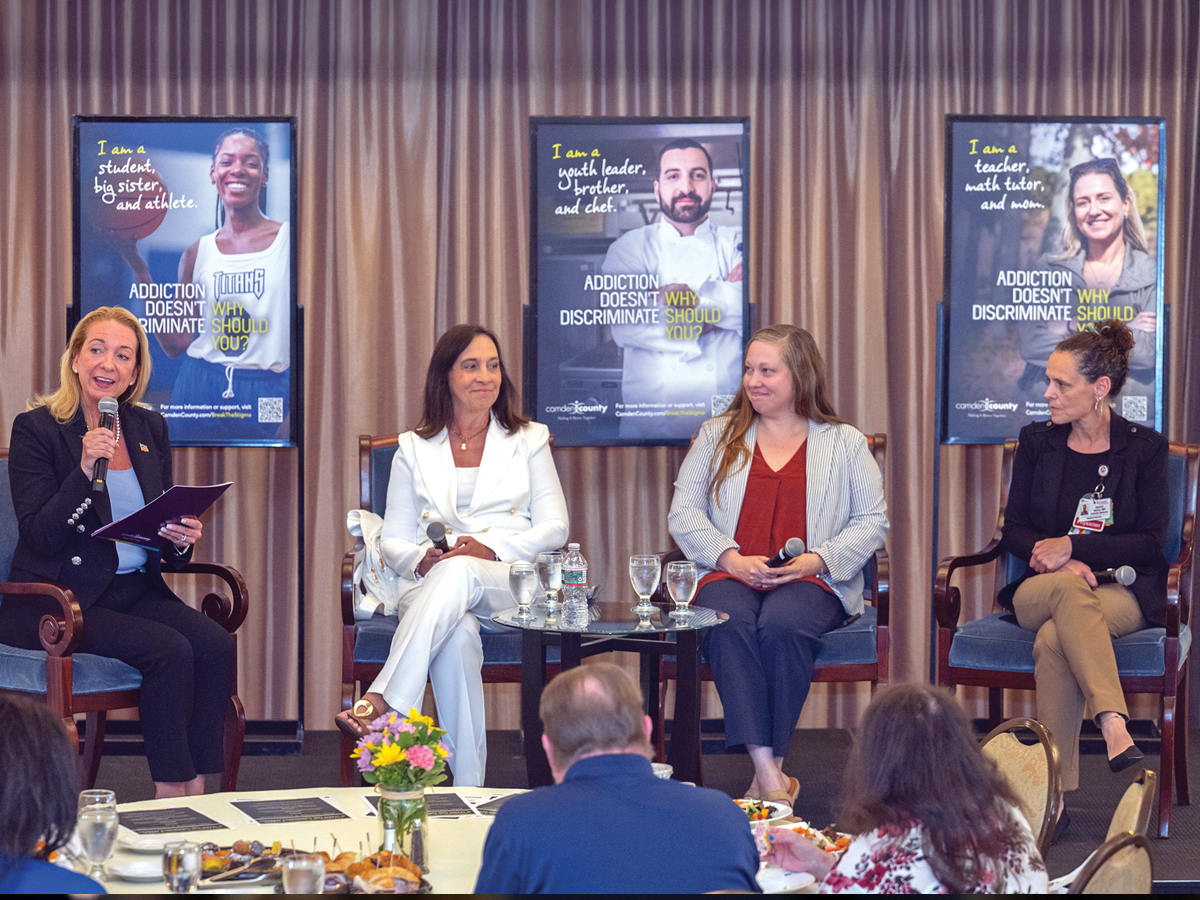
Commissioner Jennifer Cooley Fleisher moderates a panel discussion on “Breaking the Stigma” of the disease of addiction.
On June 17, community leaders from across Camden County gathered at the Collingswood Grand Ballroom for “Breaking the Stigma: A Lunch & Learn for Community Leaders,” an event designed to tackle one of the most persistent barriers to treatment and recovery: stigma.
Hosted by the Camden County Board of Commissioners in partnership with the Addiction Awareness Task Force and Cooper University Health Care, the luncheon brought together law enforcement officers, substance use counselors, educators, healthcare providers, elected officials, faith leaders, recovery advocates and families whose lives have been impacted by addiction.
The event was about stigma and the systematic failures that lead to it. But more importantly, it was about people.
The cost of silence
For many people, stigma is difficult to define. But for Lindsey Ferguson, a woman in long-term recovery and a community development professional, it was something she understood long before addiction touched her own life.
Growing up in a household where both parents struggled with addiction, she says she became aware of society’s judgment at a very young age.
“Starting as early as six years old, I had the idea that there was something wrong with addiction and that you weren’t supposed to talk about it,” she says. “So it kept me isolated for a long time.”
Despite growing up determined to avoid drugs and alcohol, Ferguson says genetics and circumstance ultimately caught up with her. By age 21, she was battling severe addiction and searching for help. Even then, stigma remained a barrier.
“It was almost a reverse stigma,” she says. “People thought, ‘You can’t possibly be this sick. You’re only 21. You’re just being dramatic.’”
Today, 18 years into recovery, she speaks openly about her experience.
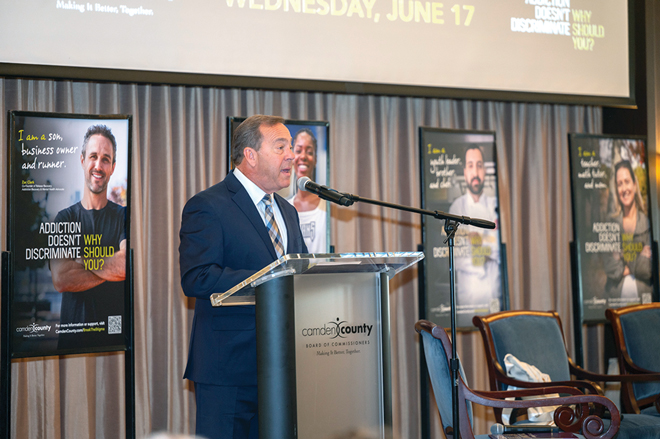
“Stigma isn’t just personal, it’s institutional,” says Commissioner Director Louis Cappelli Jr. “It shapes policies, who gets treatment, what care gets funded, and which programs are allowed to survive.”
 A mother’s story
Patty DiRenzo, a parent advocate and program coordinator for the Camden County Office of Mental Health and Addiction, lost her son, Sal, to overdose.
She describes years spent navigating a treatment system that she says often seemed unprepared – or unwilling – to help.
“We went through the revolving doors of the treatment system over and over again,” she says. “Every time we tried to get him into treatment, insurance would only cover a few days – sometimes no more than a week.”
One night, she says, she drove across New Jersey with a packed overnight bag, desperately searching for a facility that would admit her son. She remembers emergency room visits where she felt addiction was treated as a nuisance rather than a medical condition.
“I truly believe the stigma made my son use more,” she says.
Then, there was the night police knocked on her door to tell her that her son had died.
“There was no compassion,” she says. “No one sat with us. No one explained anything. It was simply, ‘Your son died,’ and then they were gone.”
“Stories like Patty’s remind us that stigma doesn’t just live in individual attitudes, it lives in systems,” says Cappelli. “When a family in crisis is met with silence instead of support, that’s a systemic failure, not a personal one. Our responsibility as a county is to build structures that respond with compassion, evidence‑based care, and real pathways to recovery. Programs like this, and the training behind them, are how we make sure our systems treat addiction as the public health issue it is and ensure no family is ever left alone seeking treatment or compassion.”
In the aftermath, she learned that people who witnessed the overdose had been afraid to call 911 because they feared arrest. That realization transformed her grief into advocacy. DiRenzo became one of the parents who helped push for New Jersey’s 911 Overdose Good Samaritan Law and later worked to expand access to naloxone throughout Camden County and beyond.
“I don’t want anyone else to go through what my son went through,” she says, “and I don’t want another family to experience what my family experienced.”
“Starting as early as six years old, I had the idea that there was something wrong with addiction and that you weren’t supposed to talk about it. So it kept me isolated for a long time.”

Replacing judgment with science
One of the event’s central themes was the importance of understanding substance use disorder as a medical condition rather than a moral failing.
Dr. Rachel Haroz, associate professor of emergency medicine at Cooper Medical School of Rowan University and medical director of the Center for Healing, says stigma often appears when personal beliefs override evidence.
“To me, stigma is the suspension of data and science because of personal beliefs,” she says.
Addiction alters brain function and decision-making, and these changes can be observed through modern imaging technology, she says.
“It’s not because they’re bad people,” says Haroz. “It’s because the parts of the brain responsible for executive function aren’t operating the way they normally would.”
“Addiction is not a choice,” she adds, “It is a chronic disease requiring ongoing, evidence-based care.”
It’s a disease that healthcare systems have not always gotten right, she says. But that’s changing.
“We’ve come a very long way since then,” says Haroz. “Today, if someone comes into one of our emergency departments with an opioid use disorder, we can offer medications for treatment right there.”
Camden County’s long-term commitment
Camden County has been working for almost a decade to address addiction through prevention, treatment, recovery support and public education.
“In this day and age, this epidemic has touched every neighborhood in Camden County,” says Cappelli. “Everybody, regardless of how successful they are, could be susceptible to this epidemic. So the question is, how do we reduce the stigma, and how do we help? That’s what we’re trying to solve.”
In response, the county established the Camden County Addiction Task Force and expanded the role of the Camden County Department of Health and Human Services in addressing the crisis. The county has since launched numerous initiatives, including Project SAVE, which places Certified Alcohol and Drug Counselors in municipal courts to connect individuals with treatment and support before they become deeply involved in the criminal justice system.
The county has also expanded naloxone access dramatically, establishing more than 700 public naloxone locations throughout Camden County with an online map to help residents locate them. The county has invested opioid settlement funds into recovery services, transportation assistance, outreach teams, medication-assisted treatment access, shelter- based support programs and prevention efforts in schools and communities.
The county is only getting started on this initiative. During this event, an education toolkit was distributed to community leaders to use in their own communities, and Camden County will continue expanding opportunities to change the conversation around Substance Use Disorder reinforcing the long‑ term commitment behind this work.
“I just want people to remember that every story we hear and every statistic we talk about represents someone’s child,” says DiRenzo. “That person is deeply loved, and their life matters.”
Additional information about Camden County’s addiction services, naloxone access points, prevention programs, and recovery resources is available through the Camden County Department of Health and Human Services and Addiction Awareness Task Force at CamdenCounty.com/BreakTheStigma.
camdencounty.com