



We often associate being healthy with physical health – staying active, eating well, managing chronic conditions, and keeping up with regular medical care. But there is another important part of our well-being that deserves just as much attention: staying connected.
These days, you may hear loneliness referred to as an “epidemic,” as increasing numbers of Americans report feelings of isolation and insignificance. In New Jersey, the Department of Human Services found that 2.3 million residents – or 1 in 4 people – across all age groups, income levels, and backgrounds suffer from loneliness and social isolation in our communities. There is clear, strong evidence that shows these issues affect both physical and mental health.
Being alone and feeling alone are not necessarily the same thing. But both can affect how we experience our lives and our health. That is why staying connected – and helping others stay connected – is so important.
A 2023 report by the U.S. Surgeon General reported that chronic loneliness and social isolation can increase a person’s risk for developing dementia by about 50%. The same report indicated a 29% higher risk of premature death. Isolation also increases the risk factor for diseases including heart disease, stroke, diabetes, and more.
“Connection doesn’t require having a large social circle or filling every day with activities. It can be as simple as calling a friend, sharing a meal, joining a community or faith group, or asking someone to stop by for a cup of coffee,” says Erika Thomas, Director of Social Connections at Samaritan.
For individuals who have difficulty leaving home or are living with serious illness, caregivers, volunteers, and care teams also play an important role in creating opportunities for meaningful connection.
We often think of older adults as being the most vulnerable population, with 44% of New Jersey seniors reporting feelings of loneliness. Yet, a wide range of individuals experience social isolation and loneliness every day.
“Social isolation doesn’t discriminate,” says Monica Lallo, an educator, team strategist and advocate with Acenda Integrated Health. “There’s an emphasis on younger children, older adults, veterans, and people with disabilities, but no one is exempt.”
Recognizing and addressing issues to reduce social isolation and loneliness is the focus of the Social Isolation, Loneliness & Connection Collaborative (SILCC), a coalition of major health systems and more than 40 nonprofits in the region, convened by Samaritan to educate the public about the dangers of social isolation and create new partnerships to work together to support improved connections.
“The work of SILCC is so important, not just to ensure our aging loved ones are taken care of, but to ensure our New Jersey community stays strong, vibrant, and connected,” says Thomas. “Social isolation is not just a social issue, but a health issue. When we help our families and neighbors to feel connected, we’re improving our community’s overall health.”
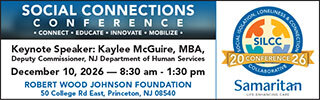
This December, Samaritan and SILCC are presenting New Jersey’s first Social Connections Conference, bringing together organizations and leaders from throughout the state to educate, network, and inspire mobilization to address the health-threatening issues social isolation and loneliness pose to our communities.
The conference is open to everyone passionate about addressing issues of social isolation and loneliness, whether they are a caregiver, a healthcare provider, a policymaker, a social worker, working in human services, a student, or just interested in building a community with strong connections. For conference information, please visit the website.
Together, we can make lasting social connections for our neighbors.